The WWU Institute for Critical Disability Studies supports faculty, staff, and community members with one-year fellowships to develop programs and carry out projects related to disability scholarship and advocacy. Each year, we build a cohort of five Fellows from differing professional and advocacy backgrounds. These fellows meet periodically throughout the calendar year to work together on their projects and learn from each other’s skills and interests.
Fellows are awarded $3,000 annually for their time in the program. This can be used for direct support as a personal stipend, or it can be used to support the project (for instance, paying research assistants or putting on an event). Fellows also consult with one or more Project Mentors.
Navigate this page
ICDS Fellows Program Mission
The goal of the WWU ICDS Fellows Program is to create a venue where faculty, staff, and local community members can develop collaborative programs and initiatives related to disability scholarship and advocacy.
About the Fellows Program
What do Fellows do?
As 2023 is our first year of this program, we do not have examples of projects, programs, or initiatives from previous cohorts. The list below includes some possible models you may want to consider, but this is by no means an exhaustive list.
- Developing a community-focused event or program
- Traveling to conduct research at an archive or to gather interviews from the community
- Building a social network among activists and artists within a community
- Creating an art project and sharing it with the public
While we would like you to have some ideas and general direction for what you’d like to do as a Fellow, you do not have to have a firm plan finalized in order to be accepted into the ICDS Fellows Program. Much of our early work in the Fellows Program can include planning and project development in consultation with Program Mentors and with the collective support of your peers in the Program.
Program Structure
The participation of Fellows in the Program is structured as follows:
- Each Fellow will submit an application in which they propose ideas and projects they are interested in working on for their fellowship period.
- Each fellow receives $3,000 for the calendar year. The awarded funds are typically distributed evenly across academic terms, but can be disbursed on a different schedule if requested.
- Fellows will be assigned mentors based on their interests and project focus. Fellows are expected to meet and check in regularly with their mentors during their project development stage.
- Fellows meet as a full cohort approximately once every other month throughout the calendar year, including once over the summer. These meetings will be hybrid, allowing both in-person and online participation.
Program Outcomes
This is a process-driven program, rather than a product-driven program. What this means is that you will be working toward a goal, but it is not vital that you finish the project within the year of the fellowship. Some projects may turn out to be too big and ambitious to finish in just one year. The Fellows Program is here to help you along the journey.
There are two outcomes for the fellows program:
- In May 2023, we will ask you to write a 1-2 page introduction and summary of your ideas and project-in-progress, which we will publish in our annual ICDS Showcase newsletter. We will help you with any editorial support you should need.
- In October 2023, we will invite you to give a 10-30 minute presentation about your work as an ICDS Fellow at the annual Disability Studies and Action Collaborative UnConference happening Saturday and Sunday, October 21 and 22, 2023.
Meet the 2023 ICDS Fellows Cohort

Erica Bigelow
I’m a philosophy PhD student at the University of Washington, and am working toward a graduate certificate in science, technology, and society studies. I hold a bachelor’s degree from Stonehill College in North Easton, MA, and a master’s degree from Miami University in Oxford, OH. I’m also a steward & organizer with UAW4121, and a philosopher-in-residence at Rainier Beach High school in Seattle.
My academic interests are quite wide-reaching; they mostly lie at the crossroads of structural injustice, disability, social epistemology, feminist philosophies, affect, and applied ethics. Some of my current projects include an evaluation of the hermeneutical and phenomenological good that diagnosis can serve as, an examination of the ways that anger gets recapitulated as Madness and the unique harms that its bearer thus becomes subjected to, and, more recently, a paper exploring the harm perpetuated by characterizing the COVID-19 pandemic through militaristic metaphors.
Kat DeNicola
she/her
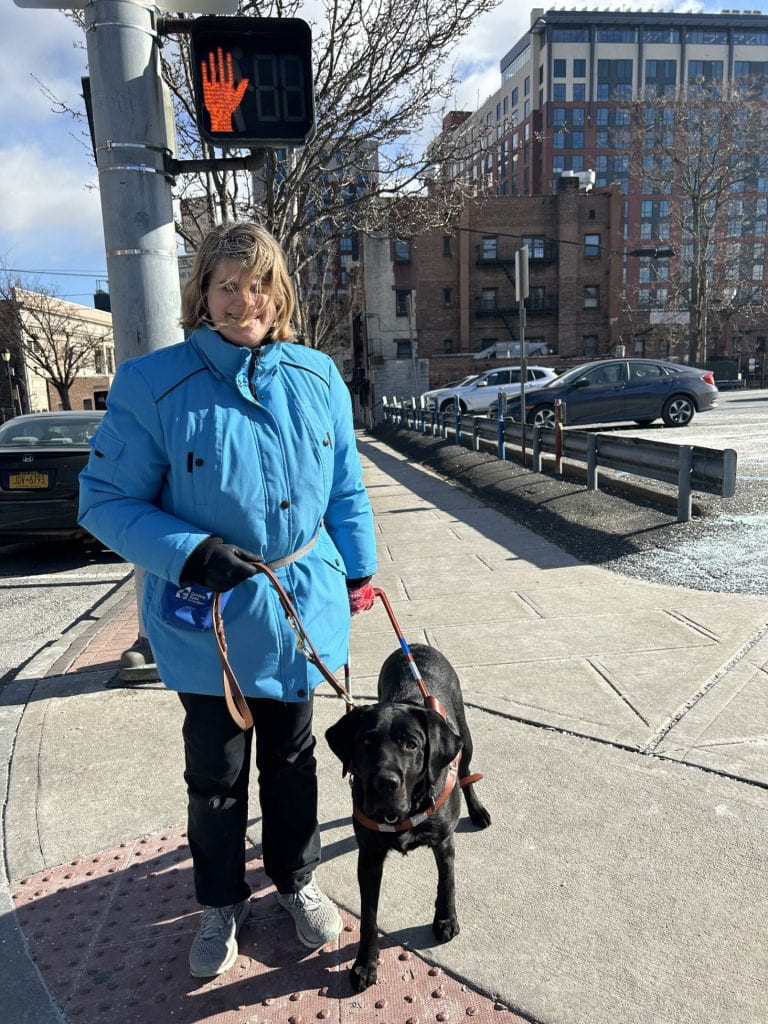
I received my Master’s degree in Counseling Education with a Rehabilitation specialty in 2014 from Portland State University. I have experience working in the vocational rehabilitation field, teaching assistive technology, and working with disabled college students which is what I currently do as an Access Manager at the WWU Disability Access Center.
One of the strongest messages disabled people receive from society is that we are broken. We are often viewed as less-than, as burdens. These judgments result in assumptions of what we can and cannot do, and thus what we are allowed and not allowed to do. As a totally blind woman, I believe the disabled body is something to be celebrated. We find ways to dance, to nurture, to create, to play sports, to make love, … And in our current climate where physical attacks on members of minority groups are increasing, we have the right to find ways to defend ourselves. The goal of my project is to provide general awareness and training to local self defense instructors on adapting their teaching techniques so that any disabled person can access training specific to their needs in an inclusive and accessible environment.
Erin Howard
they/them
Research Scientist/Engineer with the Vera C. Rubin Observatory at the University of Washington
Erin is a genderqueer and neuroqueer disabled scientist working for the Rubin Observatory at the University of Washington. They graduated from Western Washington University in June 2022 with a Bachelor of Science in physics and math/computer science, with minors in astronomy and statistics. Their time at Western was spent advocating for disabled students and working with the College of Science and Engineering through the Student Ambassadors Program to help make classrooms more accommodating to everyone. In their free time, Erin works with the University of Washington’s Disabilities, Opportunities, Internetworking, and Technology (DO-IT) program as a panelist talking about the life of a disabled student and worker. University of Washington
Jzy ||All Pronouns|| (Jazmine Joy De Leon Balila/Yeeles)
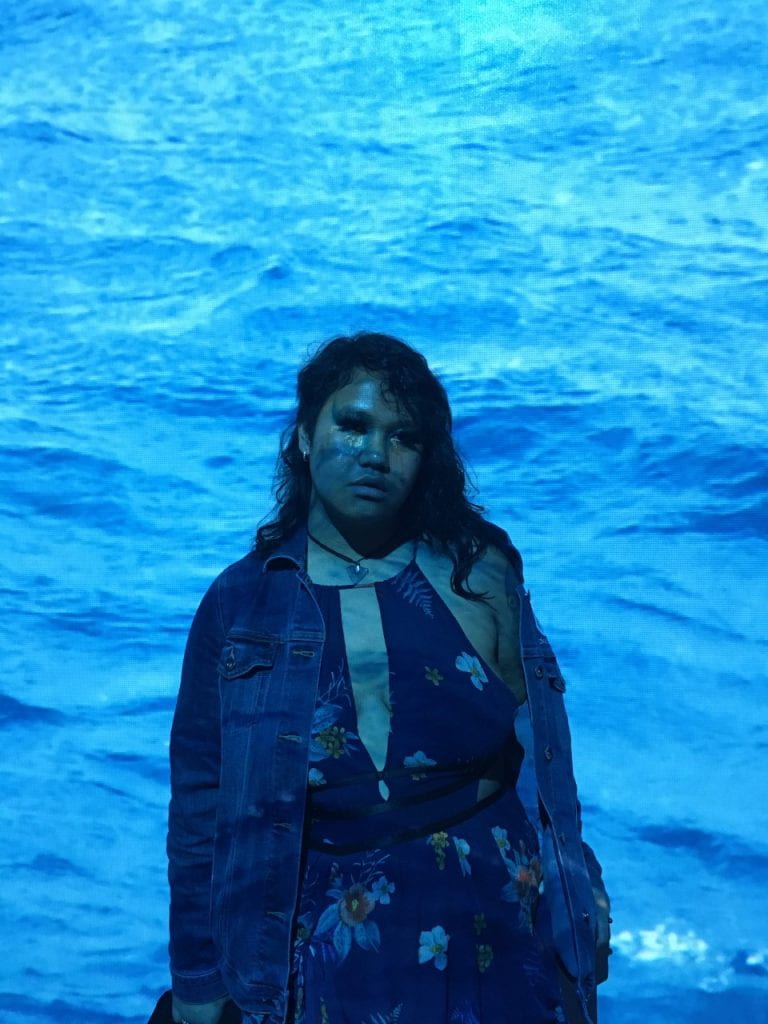
Z devised their concentration in Declaration of Interdependence: Reclamation, Remediation, and Creation, minoring in Chemistry. They exist and operate in scalars–broadening perspectives and inviting specifications into moments and cases. She is of the ocean, space, and the elements. He devotes himself to timelessness and presence.
Melina Juárez Pérez
she/they
Assistant Professor, Political Science and Women, Gender, & Sexuality Studies
Melina Juárez Pérez is an Assistant Professor in Political Science and Women, Gender, and Sexuality Studies. They were born and raised in the Central Valley, California in a Mexican immigrant farmworker community. Their work focuses on the lives, health, and happiness of Latinx and BIPoC communities, particularly that of fat, disabled, queer, and women folk. Her time as a CDS Fellow will be spent on examining the ways disability functions within Latinidad and how it shapes relationships among Latinxs.
Getting Involved
Fellows: How to apply to the ICDS Fellows Program
Applications are due 11:59 pm on Monday, January 02, 2023. The application form is at the bottom of this page. Finalists will be interviewed in the first half of January.
How to become a Project Mentor for the ICDS Fellows Program
Fellows are partnered with one of five ICDS Fellows Mentors, who are faculty, staff, or community member mentors with expertise or experience in disability scholarship and/or advocacy. Mentors meet once or twice per month with their partner fellows to discuss their projects and offer support. Project Mentors are compensated $1,000 for the calendar year.
If you are interested in serving as a mentor, please contact icds@wwu.edu so that the ICDS co-directors can follow-up with your questions and set up a phone call or Zoom meeting.
Contact us
Please contact icds.fellows.program@wwu2.onmicrosoft.com with any questions
Institute for Critical Disability Studies Fellows Application
Applications for the ICDS Fellows Program 2023 Cohort has closed.
Please check back again in October 2023 for information on the next application cycle!
Application deadline: 11:59 pm, Monday, January 02, 2023