Skip to main contentWestern Washington University Western Washington University
  • Calendar
  • Directory
  • Index
  • Map
  • myWestern
Refine search

Disability Studies and Action Collaborative

Disability Culture, Scholarship, and Community

Search
  • Home
    • DSAC Network
  • Institute
    • People
    • ICDS Student Advisory Council
    • ICDS DSAC 2023 Annual Showcase
    • ICDS Scholars Week
  • Academic Program
    • DISA Courses
    • Minor in Critical Disability Studies
  • Fellows Program
  • Student Employment & Scholarships
    • Mark West Scholarship
    • Scholarships for CDS Minors
    • Grad Teaching Assistantships
  • 2025 UnConference
  • Resources
    • Support and Discussion Groups
    • ICDS Student Advisory Council
    • Workshops and Resource Pages
  • Events and Announcements
    • Upcoming Events
      • DSAC Annual UnConference
      • Support and Discussion Groups
      • All Other Events
    • Past Events Archive
    • Newsletters and Reports

Search Results for: 2023

Archived 2023 DSAC Annual UnConference

This is an archived page for the UnConference that occurred on Saturday & Sunday, October 21 & 22, 2023.

Our Annual Fall UnConference is Saturday & Sunday, October 21 – 22, 2023
The application to register for the 2023 UnConference is now closed.


Parking, Wifi, Maps, and Local Guides
Last year’s 2022 UnConference Page

UnConference 2023

Disability Studies & Action Collaborative UnConferece

Saturday October 21 – Sunday October 22, 2023
10:00 – 5:00 pm
Academic Instructional Center West
Western Washington University, Bellingham Campus

  • UnConference 2023 Final Program –
    • Download the 2023 Presentation Program
      • Check out last year’s UnConference 2022 Program, which includes descriptions for presentation sessions. 
  • Local Information and Guides
    • This page includes parking information, maps of the building and campus, and links to public transit information
  • Participant-only links – please use the password sent in your confirmation email
    1. Tentative Participants List (password required) – A list of Participants and their profiles
    2. Preliminary Program and Presentation Groupings (password required) – A tentative draft program of the UnConference and participant workshop, panel, and presentation groupings.
    3. Registration Part 2 (password required) – The follow-up Participant Information Form for confirmed UnConference participants. Participants: Please complete Part 2 Registration by Friday August 25 so that we can complete the event program.

Not attending this year, but still interested in helping us conduct the UnConference this and future years? Donate to our Special Events fund!


About the UnConference

The Western Washington University Institute for Critical Disability Studies is excited to to be hosting our third annual Disability Studies and Action Collaborative (DSAC) UnConference in October 2023.

The event will span two days, and it will provide a venue for scholars, students, nonprofit workers, advocates, activists, artists, and other community members can gather to discuss issues of disability, access, and equity. Our main focus will be local to the needs, concerns, and opportunities of Bellingham, WA and the surrounding Pacific Northwest region.

This event is planned in the ethos of Universal Design. All materials and activities will be designed to accommodate all participants through audio interpreters, downloadable documents, and other accommodations participants request in the application form.

What is an UnConference?

An UnConference is a collaborative event where “experts” of various kinds (broadly defined) get together to learn from one another and solve problems. So, while traditional conferences usually involve experts on a stage giving pre-written presentations, UnConferences focus more on workshops and problem-solving sessions, where participants work together to understand complex problems and devise new solutions.

How is the DSAC UnConference structured?

The DSAC UnConference has aspects of both traditional conferences and UnConferences. Everyone who participates in the event will be assigned to a working group based on their interests and skills. Participants in these working groups will identify a particular disability-related question, problem, project, or idea, and they will work together throughout the first day of the UnConference to find a way to solve that problem or push that idea forward.

The second day of the event follows a more traditional conference format. Every participant will give a presentation ranging from 5 to 30 minutes on topics related to disability studies, disability arts, public advocacy, or other subjects relevant to issues of disability, access, and equity.

Visit the Call for Participation and Application page to find out more information about the conference or contact the organizers at icds.unconference@wwu2.onmicrosoft.com.


2023 UnConference Application

The 2023 UnConference Application has closed.

The DSAC UnConference Archives

2022 UnConference Archive
2019 UnConference Archive

Program 2023 UnConference

Day One — Workshop Schedule

  • Check-in & refreshments: AW ground floor & AW sky bridge (top floor)
    • 9:30 am – 10:15 am
  • Welcome: AW sky bridge
    • 10:15 am – 10:30 am
  • Workshop Session A – Discovery: Multiple Rooms (AW top floor)
    • 10:45 am – 12:00 pm
  • Lunch: AW sky bridge & AW 408
    • 12:00 pm – 1:15 pm
  • Workshop Session B – Opportunities: Multiple Rooms (AW top floor)
    • 1:15 pm – 2:15 pm
  • Workshop Session C – Project Development: Multiple Rooms (AW top floor)
    • 2:30 pm – 3:30 pm
  • Day 1 Closing Session D – Sharing Out & ICDS Award Recognition: AW 403
    • 3:45 pm – 4:45 pm
  • Day 1 Reception – AW sky bridge
    • 4:45 pm – 5:30 pm

Day Two Program — Presentation Sessions and Workshops

  • Morning refreshments: AW sky bridge (top floor)
    • 9:30 am – 10:00 am
  • Morning Panel and Presentation Sessions
    • 10:00 am – 11:15 am
      • Session A1: AW 406
        Experiencing Disability and Deafness through Arts and Culture
      • Session A2: AW 410
        Empowering Local Disabled Communities
    • 11:30 am – 12:30 pm
      • Session B1: AW 406
        Disability Studies Research
      • Session B2: AW 410
        Workshop: Design Clinic
  • Lunch: AW sky bridge & AW 408
    • 12:30 pm – 1:30 pm
  • Afternoon Panel and Presentation Sessions
    • 1:30 pm – 2:45 pm
      • Session C1: AW 406
        Community Building, Pride, and Allyship
      • Session C2: AW 410
        Systems of Oppression and Systems of Empowerment in Education
    • 3:00 pm – 4:00 pm
      • Session D1: AW 406
    • Workshop: Reclamation; Intersections of Caretaking & Stewardship
      • Session D2: AW 410
      • Roundtable: Disability and Student Experience
    • 4:15 – 5:00 pm
      • Session E1: AW 406
        Intersections of Identity and Action
      • Session E2: AW 410
        Workshop: Disabled Experience through Letter Writing


Session A1: AW 405 Experiencing Disability and Deafness through Arts and Culture

This panel focuses on artistic production, including poetry, visual arts, and performance. Panelist will explore how artistic work allows Deaf and disabled people to express important insights and how art can serve an important function within Deaf and disabled communities.

Session A2: AW 403 Empowering Local Disabled Communities

This panel explores practices for building communities that are accessible and welcoming to Deaf and disabled communities in Bellingham and the surrounding region.


11:30 am – 12:30 pm 

Session B1: AW 405 Disability Studies Research 

This panel features research projects currently in process. It will explore how disability studies concepts can lead to productive research projects, as well as the challenges and possibilities of various research methodologies. 

Session B2: AW 403 Workshop: Design Clinic 

This workshop will pick up where the day 1 working groups left off, inviting participants to pitch ideas for larger development and implementation in the future. It will draw on the “design clinic” model developed by the Center for Community Learning at WWU.


1:30 – 2:45 pm

Session C1: AW 405 Community Building, Pride, and Allyship 

This panel explores the ways we can build accessible communities that value the unique knowledge of Deaf and disabled people. It will investigate topics including disability pride, allyship, and specific workplace, institutional, or academic contexts.

Session C2: AW 403 Systems of Oppression and Systems of Empowerment in Education

This panel focuses on issues of disability within educational settings, both K-12 and higher education. It will address the negative aspects of educational systems and also the positive possibilities of supportive practices including counseling, tutoring, and disability-conscious teaching. 


3:00 – 4:00 pm 

Session D1: AW 405 Workshop: Reclamation; Intersections of Caretaking & Stewardship 

Participants will be invited to explore their inter-entity connections through sensory mapping and narrating. Art supplies will be provided, participants encouraged to bring their media to the space for assurance. 

Session D2: AW 403 Roundtable: Disability and Student Experience


4:15 – 5:00 pm

Session E1: AW 405 Intersections of Identity and Action

This panel explores the ways personal identity and cultural identity can inspire action and community building.

Session E2: AW 403 Workshop: Disabled Experience through Letter Writing


UnConference 2023 Presentation Details

Presentation 

Click here to access the finalized presentation panel schedule.

Presenting at the UnConference

You will present with several other people as part of 60- or 75-minute panels. These panels will be hybrid, meaning that some panelists will present over Zoom while others will be in the physical presentation room. There will be UnConference staff available to assist you with getting your presentation set up.

Presentations may include visual elements if you desire, but these are not required. Presenters may choose to use PowerPoint slides or handouts, for instance. If you are using slides, be sure you have them available via a USB drive or an online drive. 

Presenters have the option of pre-recording their presentation and playing it at the panel session. If they do so, they should communicate with the panel moderator to make arrangements. 

All panel sessions will leave open time for question and answer with the audience and among the presenters. Even if you are submitting a pre-recorded presentation, you should still participate in the question and answer time. 

Presentation Types

One option for presenting is to give a traditional talk or lecture. These will be either 10 or 15 minutes long. 

Another option is to give a 5-minute discussion starter presentation. This format is highly adaptable. The presenter names a specific topic they find interesting or important. They explain about their interest in the topic and suggest some reasons why it would be important for others to think about. They then pose two or three questions for the panelists to discuss related to the topic. All of the panelists respond to the prompt, if they are able to, before they move on to the next question from the presenter. All told, the discussion starter presentation should represent 10-15 minutes of time for the panel: 5 minutes for the initial presenter, then 5-10 minutes for the discussion with the panel. 

Here is an example:

  • I might give a discussion starter on the topic of graduate student teachers with disabilities. I might point out the challenges they face managing their own needs for accommodation as a graduate student, while also learning to be teachers for the first time. I might point out the emotional complexity of having to provide accommodations to their students while being disabled themselves and struggling to understand their role as teachers.
  • Then I might ask three questions: 1. How can we provide a more empowering place for new grad students to explore their own disability identity, and why might it matter? 2. How can we put disabled teachers in the position to be mentors for their disabled students? 3. How can we help new disabled teachers work sustainably?
  • Then everyone on the panel might respond to these questions one at a time

Note that the discussion starter conversation is not meant to replace the standard Q&A at the end of the panel. 

Accessibility 

Please prepare your presentation to be as accessible as possible. If you use visual aids, make sure you are allowing for the full participation of audience members and panelists with visual impairments. For instance, when you include images or quotations on your slides, pause to describe them or read the quotation aloud. If you provide a handout, explain what is included and provide a link people can follow to download it during the presentation or after the fact. 

Getting Help

Reach out to lucchea@wwu.edu if you have any questions about the presentation sessions. Individual coaching is available at these times:

  • Mon, Sept 25 12-1:30
  • Tue, Sept 26 4-5:30
  • Wed, Sept 27 1:30-3
  • Mon, Oct 1 5-6:30
  • Fri, Oct 6 9-10:30
  • Mon, Oct 9 5-6:30
  • Thu, Oct 12 11-12:30
These sessions will all be over Zoom at this meeting room. If none of these times works for you, please let me know and we’ll find another time. 

2023 UnConference Resources and Local Guide

This page contains useful links participants, including suggestions for getting around by bus and car, as well as local information and suggested accommodations.

    • Parking, Taxi, and Rideshare Information
    • Local Public Transit and Walking to the UnConference (opens in new page)
    • Hotel Accommodations for out-of-town visitors
    • Wi-Fi and Internet access
    • Building Maps
    • Other Local and on-campus events and Resources

Drivers should use the south end of Parking Lot 19G as a drop off destination.  (GPS coordinates and Google maps link: 48.732392, -122.487142)

Parking on campus is FREE due to WWU Fall Family Weekend.  You may find close-proximity and accessible parking for the UnConference in lot 19G, which is directly across from the UnConference Academic West building.  Signs will be posted on West College Way, Wade King service road, Highland Drive, and 21st Street to direct vehicles.

Map of the Western Washington University campus. There is a parking lot reserved for UnConference attendees, Lot 19G, which can be accessed by turning on to Wade King service road from West College Way, and then turning right onto 21st Street at the T intersection at the Interdisciplinary Science Building. The path is indicated by red arrows on the map.

Parking map for the UnConference. Click to open a larger version of the map, or download a PDF of the map here.

Driving Directions

Hotel recommendations:

If you are flying in via SeaTac (SEA), one option is the Four Points Sheraton (www.fourpointsbellingham.com), which has a WWU discount rate and Airporter Shuttle service to and from SeaTac airport (www.airporter.com/shuttle). This hotel is adjacent to a Fred Meyer market and pharmacy, across the street from a Whole Foods Market, and next to a bus line, stop ID 3294 (20 minute bus ride to campus is served every 30 minutes via route 197 Lincoln/WWU or 190 Downtown).

Note that if you are flying in via Bellingham (BLI), the hotel at the airport, Holiday Inn & Suites, does not offer area transportation or shuttle service.

Full list of lodging recommendations:

For a full table of accommodations near WWU categorized by price range, with phone numbers, distance from campus, and whether a WWU discount is offered, visit the Admissions website.

Click on the thumbnails below to open tentative floor maps for the 2022 UnConference.  We expect our room plan for the 2023 UnConference to be similar. Click here to open floor-by-floor maps of AW as a downloadable pdf instead.

Map of the ground floor of Academic West building. The north end of the building has tables with check-ins, and information. Parking is to the West of the building in Lot 19G. There is a quiet room in AW 205.

AW ground floor (check-in and information desk)

Map of the top floor of Academic West building. Coffee, morning refreshments, Day 1 reception, and Lunch daily, as well as all in-person workshop rooms and Day 2 presentations are on this floor. Restrooms on this floor are designated gender-neutral restrooms. There is a quiet room in AW 406.

AW top floor (All sessions, all meals)

Guest Wireless Access Networks

Use the open wireless network WWUwireless-Guest to access web if you are a non-student.

Use the secured wireless network eduroam if you are a University students from another institution.  Your university .edu login credentials will allow you to access this network.

Learn more at http://atus.wwu.edu and click on the icon for Wireless & Networking.   The direct link is here: https://atus.wwu.edu/kb/connecting-westerns-wireless-network

You are also invited to check out the many local shops and restaurants downtown.  In particular, there are many places to explore along Railroad avenue, the street directly next to the bus station.  Find more information on bus schedules throughout Bellingham here.  Railroad Avenue has free angle-in street parking after 6pm on Saturday, and all day Sunday.

What is also happening at WWU this weekend?

This weekend is also Fall Family Weekend at WWU. During the day, there will be tours and exhibits throughout campus.
For more information, visit nssfo.wwu.edu/fall-family-weekend

Places to check out: Saturday Farmer’s Market (downtown)

The Bellingham Farmer’s Market  (www.bellinghamfarmers.org/) at Depot Market Square, 1100 Railroad Avenue, is an open-air community market with over a hundred vendors selling fresh food, produce, handmade goods, and more.  Hours are 10 am – 3 pm.  Some vendor stations may be in non-covered locations.

Places to check out: Ruckus room (downtown)

The Ruckus Room is on Railroad Avenue, just across the street from the Downtown Bellingham bus station.  The location has snacks and concessions, and classic arcade games, skee-ball, pinball, and prizes.

Ruckus Room: www.ruckusbham.com

Bellingham-area resources for accessibility needs

Below are some local resources that UnConference attendees can use if their service animals need care, their assistive technology needs repair or maintenance, or they need to connect with someone local for any other reason.

  • Bellevue Healthcare Whatcom County: www.bellevuehealthcare.com
  • Numotion wheelchair and mobility equipment and repairs: www.numotion.com
  • Hearing, Speech, & Deafness Center: www.hsdc.org
  • MudBay animal supplies: www.mudbay.com

2023 DSAC UnConference: Call for Participants & Application Form

Application Deadline: 11:59 pm, Friday August 04, 2023
Note: Applications received by Friday, July 21, 2023 will receive priority consideration and first choice in presentation time.

How to apply:

  • Complete the UnConference Application online here (google forms)
    or
  • Download the Word version of the application document, fill in, and email to icds.unconference@wwu2.onmicrosoft.com and icds@wwu.edu

About the Disability Studies and Action Collaborative (DSAC) UnConference

Event details

  • Event dates: Saturday and Sunday, October 21 & 22, 2023, 10:00 am – 5:00 pm
  • Event location: Academic West Building, Western Washington University
    • hybrid remote options available
  • Application deadline: 11:59 pm, Friday August 04, 2023
  • Participation Fee: Sliding scale from $0 to $250

What happens at the UnConference?

The annual Disability Studies and Action Collaborative (DSAC) UnConference is one part traditional academic conference and one part collaborative, exploratory workshop. Our aim is to gather in one place, learn from one another’s skills and experiences, and identify avenues where we can productively collaborate across the borders of academia and the community.

This two-day-long event is designed to bring together people from Whatcom county and the surrounding Pacific Northwest region. We welcome participants with personal or professional interests in such topics as:

Activism and Advocacy

  • Fair access to local community resources, networks, and spaces
  • Advocacy models from local community organizations
  • Current projects and unmet needs in disability activism

Community Building

  • Perspectives on local disability culture, community building, and solidarity work
  • Approaches to fighting disability stigma and fostering disability pride

Critical Disability Studies

  • Disability Studies scholarship from a variety of critical approaches and academic fields
  • Curriculum, program building, museum studies, and pedagogy informed by disability studies

Access and Equity

  • Access and equity in educational settings
  • Practices for barrier-free teaching and facilitation in higher education or other settings
  • Universal design in physical or digital settings

Arts and Culture

  • Disability and various creative arts, including dance, film, music, or visual arts
  • Disability and artistic practice

Activities at the UnConference and beyond

The UnConference will be broken into two days. All participants will be expected to contribute to each day. Continued participation in follow-up activities after the two-day event is welcomed.

  • Saturday, October 21, 2023: The Workshop Day. Participants will be assigned into working groups based on their skills and interests. They will meet in several working sessions to address a problem or topic that everyone has an interest in. The goal is to come up with a collaborative project to address this problem or idea, which will be shared at the end of the day.
  • Sunday, October 22, 2023: The Presentation Day. Participants will be grouped into topics and present in panels with other speakers. Presentations will range from 5 to 30 minutes in a format of their choosing, including rapid roundtable discussions, pre-recorded videos, and formal talks.
  • After the UnConference Concludes: UnConference Follow-up Activities. Participants are invited to join in periodic meetings and events organized by the WWU Institute for Critical Disability Studies

Who can participate in the UnConference?

Everyone with an interest in disability is welcome to join the event. This may include, but is not limited to, faculty, students, university staff, disability service providers, librarians, nonprofit or public services professionals, activists, artists, performers, engineers, entrepreneurs, and interested community members. We expect those selected to participate as fully as they are able across the course of both days. Both virtual (Zoom) and in-person hybrid participation modes will be available.

Because space is limited, the Working Sessions and Seminar Sessions are only open to attendees who have been accepted to the UnConference. Preference will be given to those who identify as having a disability or other marginalized population traditionally excluded from professional or academic spaces. For those who would like to attend but who would need financial assistance to do so, please reach out to us at icds.unconference@wwu2.onmicrosoft.com.

How to Apply to Attend the DSAC UnConference

Every person who wishes to participate in the UnConference will complete an online application and submit a brief personal statement, an overview of your disability-related work, an interesting problem or challenge you would like to explore at the UnConference, and a list of skills and interests you are interested in contributing in the Working Sessions. To facilitate community building, participants will be invited to read one another’s materials before the start of the UnConference.

Applications received by Friday, July 21 2023 will receive priority consideration and first choice in presentation time. Final applications are due 11:59 pm, Friday August 04, 2023.

Apply online to participate in the 2023 UnConference (Google Forms)
Alternative UnConference Application (Word Doc)

ICDS DSAC 2023 Annual Showcase

Table of Contents

Letter from the Co-Directors
Critical Disability Studies Academic Program
Annual UnConference Returns!
Clubs and Events
Scholarships & Fellowships
People
Creative & Scholarly Submissions

Letter from the Co-Directors

Dear Institute for Critical Disability Studies community,

Welcome to our first ICDS Disability Studies and Action Collaborative Annual Showcase, as we reflect on our exciting first years as a community, and our first full year as an official Institute at Western Washington University.  

In our first year at the Institute for Critical Disability Studies, we have achieved significant milestones, including the launch of a new academic program in Critical Disability Studies and the introduction of a CDS minor. These programs have received enthusiastic responses from students, and we have developed core courses to cater to their needs. We began offering our first critical disability studies course this Spring, and launched the first core course and GUR, DISA 330 Critical Disability Studies, this summer. We are excited to announce that this coming academic year will include five DISA courses including quarterly offerings of DISA 330 in both in-person and remote modalities, as well as two offerings of DISA 350, our Topics in Critical Disability Studies with five more courses planned for the upcoming year. You can find a full listing of all Critical Disability Studies courses and related electives on our website.

Students have been integral to our work, serving on committees and forming a student advisory council you will read about elsewhere in this Showcase. Through the support of our donors, we have also been able to provide the Mark West scholarship to students doing activist or scholarly work on disability issues. 

Last year, after a hiatus due to the COVID-19 pandemic, we successfully hosted the second annual fall Disability Studies and Action Collaborative UnConference in October 2022, which facilitated collaboration, community building, and the sharing of expertise among participants [link]. We also organized presentations by esteemed scholars and creators, highlighting our commitment to uplifting BIPOC voices and promoting Disability Justice. Click below to access video recordings of presentations by Dr. Pau Abustan titled “Comfy, Cozy, Community Centered Learning: A Queer, Crip, Philipinx Led Disability Justice Praxis“ and Dr. Sami Schalk titled “Introduction to Disability Justice and Accessible Pedagogy” We are working on offering our third annual UnConference for this coming October 21 and 22, 2023.

We are proud to announce our first cohort of ICDS Fellows, who have been working on exciting projects related to disability scholarship, advocacy, and culture throughout 2023. More information about them can be found on our Fellows page.

Looking ahead, we have ambitious plans for the future. We aim to continue our public programming, including the UnConference and invited speaker events, to showcase our commitment to collaboration and intersectionality. We also intend to expand our scholarship programs, tailoring them to different areas of engagement with Critical Disability Studies. Moreover, we will work on growing our minor by creating new courses and expanding the curriculum to include topics such as race, intersectionality, and disability, and disability in the performing arts.

Supporting disabled students, faculty, and staff at Western is a priority for us. Beginning in fall 2023, we are launching support and discussion groups, focusing on issues like teaching and supporting students as a disabled faculty and staff, and on fostering an activist-minded disability community. These initiatives are part of our larger role as leaders of disability culture at Western.  We are excited to discuss and share more ideas and initiatives from within our community.

If you believe in the value of our work, we invite you to join us. Subscribe to our mailing list for updates on meetings, courses, and events. Participate in our committees to support curriculum development, events planning, fundraising, and outreach efforts. We also invite Western faculty to reach out to us if interested in teaching DISA courses and adding more courses to our ever-growing and interdisciplinary list of electives for our Minor in Critical Disability Studies. Additionally, you can contribute to the ICDS at any time by making a donation to the Institute through the WWU Foundation, to allow us to develop new programs in the future. Find the link to donate on our website.

We would like to express our gratitude to all those who have contributed to our success this year. Profiles of many individuals can be found in the showcase, and we appreciate the involvement of the wider community at Western and beyond.

Warm regards,

Andrew Lucchesi and G McGrew

Institute for Critical Disability Studies Co-Directors

Disability Studies and Action Collaborative Logo, in dark blue, blue, and green, implying letters I, C, D, and S using colors and negative space.

Critical Disability Studies Academic Program

New Courses and Minor Approved!

As of Fall 2023 students can now register for the anticipated minor in Critical Disability Studies. The minor explores disability through the study of social access, cultural beliefs, and lived experiences. Both Spring 2023 and Fall 2023 will feature the flagship course of the Critical Disability Studies Minor: DISA 330- Critical Disability Studies. This course focuses on topics such as disability rights and disability justice movements, cultural criticism of literature and popular media, and the principles of universal design in physical and digital spaces. The enthusiasm for this program has been incredible. In both quarters, the Critical Disability Studies course filled within Phase 1 of registration.

Minor Launch Party

To commemorate the launch of the new Critical Disability Studies minor, The Institute for Critical Disability Studies (ICDS) hosted a celebratory launch party with members of the ICDS and students interested in the minor.

The Annual UnConference Returns!

The Disability Studies & Action Collaborative UnConference is a balance between an academic conference and a collaborative exploratory workshop. This two day event centered around interactive workshops and problem-solving sessions, where teams collaborated to tackle complex issues and uncover potential solutions. 

The first day of the Unconference consisted of multiple workshops. Participants were placed into groups based on their skills and interests. Throughout the day, groups worked in  several sessions to diligently examine their given topics. The workshop topics ranged from accessibility of resources within education and healthcare, to the accommodation shift post-COVID, to intersectionality. Each session served as a safe space for exchanging  ideas, fostering meaningful conversations, and nurturing innovative solutions. You can read the summaries of these workshops here.

On the second day, the Unconference held  their Presentation Day, where panels were created based on topics, and presented in a multitude of formats including, but not limited to: rapid roundtable discussions, pre-recorded videos, and formal talks. These presentations touched upon various themes such as Neurodiversity, Leadership, Peers, and Student Experience, Disability in History and the Archives, and Disability in Media and Social Media.

Clubs, Outreach, and Events

Student Advisory Council (SAC)

The Institute for Critical Disability Studies Student Advisory Council (SAC) functions with the goal of ensuring that the disabled student body is heard within the ICDS. The SAC is a student-run organization composed of both undergraduate and graduate students that   represent the needs and priorities of students through community discussion. The focus of the council includes disability representation within administration, curriculum development for education on disability, determining and sharing communities and spaces available for disabled students, and physical accessibility. The ICDS and SAC prioritizes student voices and guarantees a safe environment for students to share their thoughts and concerns. This year, the SAC was inaugurated by the ICDS’s Graduate TA, Hidemi Mitani Shen, and an official council charter was created in collaboration with students and SAC leadership. SAC Leadership has also held conversations on improving accessibility within the University. The SAC’s main focus for this Spring Quarter was to create a recruitment plan to engage more students in the upcoming academic year.  Next year, the SAC also plans to collaborate with other university organizations and clubs to improve disability training resources for faculty members, increase student participation, and continue to give a safe space for the disability community to have their voice be heard.

ICDS Representing at WWU QueerCon 2023

On Saturday, April 29, 2023 the Institute for Critical Disability Studies tabled at Western Washington University’s 7th Annual QueerCon event. With a focus on intersectional community, the event hosts over 80 tables from vendors and organizations. The ICDS shared ways for students to get involved with the institute, and distributed information about the new Critical Disability Studies minor. The table had a great turnout, and was out of fliers by the end of the event.  

Scholars Week and Dr. Sami Schalk Keynote

Western Washington University Scholars Week is an annual showcase that features research and creative work from both undergraduate and graduate students. This year, the showcase included presentations from faculty and student groups, a poster session, three-minute thesis presentations, and readings of creative works. Across campus, Scholars Week was being celebrated with several events including a virtual presentation by Dr. Sami Schalk. The ICDS held a meeting with Dr. Sami Schalk to discuss Critical Disability Studies, identifying new things to implement for the Institute moving forward.

Give Day

The 2023 Annual WWU ICDS Give Day raised $2,235 from 21 generous donors. These donations  help the ICDS by supporting our programming and advocacy work, ensuring our events are affordable and accessible to all, and helping us directly support Western students through job opportunities and scholarship awards. Every small donation helped us meet the entire ICDS Scholarship Match Challenge, which unlocked an additional $1,000 in scholarship funds for our new General Scholarship Fund.

Featured Speakers and Events

We hosted two invited speakers in 2022/2023, Dr. Pau Abustan (Cal. State Los Angeles) and Dr. Sami Schalk (University of Wisconsin, Madison). Click the links below to access recordings of their presentations. We are grateful to the programs and departments who helped support these events. 

Portrait photo of Pau Abustan

Dr. Pau Abustan presented as the keynote speaker at the 2022 UnConference of the Disability Studies and Action Collaborative. Their presentation titled “Comfy, Cozy, Community Centered Learning: A Queer, Crip, Philipinx Led Disability Justice Praxis” focuses on connections between personal history and community strength. 

Photo of Sami Schalk

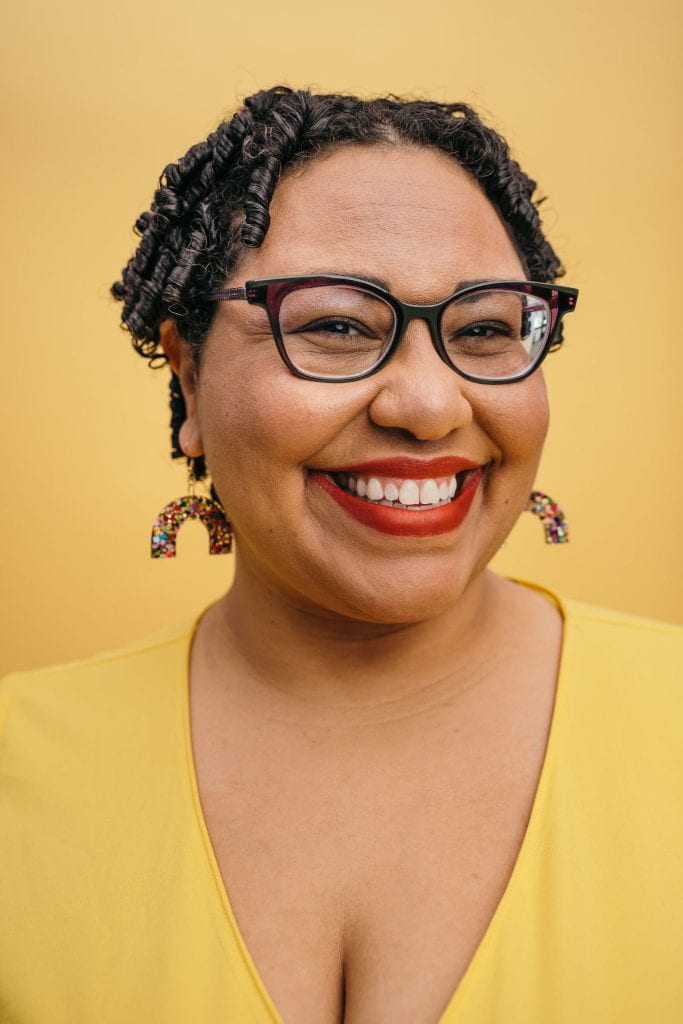
Dr. Sami Schalk presented as the featured speaker for 2023 Scholars Week. Her presentation titled “Introduction to Disability Justice and Accessible Pedagogy” focuses on the ways radical ideas about disability activism and community building can lead to more accessible teaching practices. This presentation was co-sponsored by the departments of English, Health and Human Development, Journalism, Philosophy, Anthropology, Sociology, Political Science, History, and the Women, Gender, and Sexuality Studies program.

ICDS Scholarships and Fellowships

The WWU Institute for Critical Disability Studies supports faculty, staff, and community members through one-year fellowships where Fellows engage in programs or projects related to disability scholarship and advocacy. This new process-driven program, launched in 2023, builds an annual cohort of five Fellows from various professional and advocacy backgrounds. 

Meet the 2023 ICDS Fellows Cohort

Erica Bigelow

I’m a philosophy PhD student at the University of Washington, and am working toward a graduate certificate in science, technology, and society studies. I hold a bachelor’s degree from Stonehill College in North Easton, MA, and a master’s degree from Miami University in Oxford, OH. I’m also a steward & organizer with UAW4121, and a philosopher-in-residence at Rainier Beach High school in Seattle. My academic interests are quite wide-reaching; they mostly lie at the crossroads of structural injustice, disability, social epistemology, feminist philosophies, affect, and applied ethics. Some of my current projects include an evaluation of the hermeneutical and phenomenological good that diagnosis can serve as, an examination of the ways that anger gets recapitulated as Madness and the unique harms that its bearer thus becomes subjected to, and, more recently, a paper exploring the harm perpetuated by characterizing the COVID-19 pandemic through militaristic metaphors. 

Kat DeNicola (she/her)

I received my Master’s degree in Counseling Education with a Rehabilitation specialty in 2014 from Portland State University. I have experience working in the vocational rehabilitation field, teaching assistive technology, and working with disabled college students which is what I currently do as an Access Manager at the WWU Disability Access Center. One of the strongest messages disabled people receive from society is that we are broken. We are often viewed as less-than, as burdens. These judgments result in assumptions of what we can and cannot do, and thus what we are allowed and not allowed to do. As a totally blind woman, I believe the disabled body is something to be celebrated. We find ways to dance, to nurture, to create, to play sports, to make love, … And in our current climate where physical attacks on members of minority groups are increasing, we have the right to find ways to defend ourselves. The goal of my project is to provide general awareness and training to local self defense instructors on adapting their teaching techniques so that any disabled person can access training specific to their needs in an inclusive and accessible environment.

Erin Howard (they/them)

Research Scientist/Engineer with the Vera C. Rubin Observatory at the University of Washington 

Erin is a genderqueer and neuroqueer disabled scientist working for the Rubin Observatory at the University of Washington. They graduated from Western Washington University in June 2022 with a Bachelor of Science in physics and math/computer science, with minors in astronomy and statistics. Their time at Western was spent advocating for disabled students and working with the College of Science and Engineering through the Student Ambassadors Program to help make classrooms more accommodating to everyone. In their free time, Erin works with the University of Washington’s Disabilities, Opportunities, Internetworking, and Technology (DO-IT) program as a panelist talking about the life of a disabled student and worker. University of Washington

Jzy (Jazmine Joy De Leon Balila/Yeeles) All Pronouns 

Z devised their concentration in Declaration of Interdependence: Reclamation, Remediation, and Creation, minoring in Chemistry. They exist and operate in scalars–broadening perspectives and inviting specifications into moments and cases. She is of the ocean, space, and the elements. He devotes himself to timelessness and presence.

Melina Juárez Pérez (she/they)

Assistant Professor, Political Science and Women, Gender, & Sexuality Studies

Melina Juárez Pérez is an Assistant Professor in Political Science and Women, Gender, and Sexuality Studies. They were born and raised in the Central Valley, California in a Mexican immigrant farmworker community. Their work focuses on the lives, health, and happiness of Latinx and BIPoC communities, particularly that of fat, disabled, queer, and women folk. Her time as a CDS Fellow will be spent on examining the ways disability functions within Latinidad and how it shapes relationships among Latinxs.  

Mark West Scholarship Recipients

The Mark West Scholarship supports WWU students that are engaging in studies related to disability studies and accessibility. The scholarship application is also an option for students that contribute to disability culture at Western through arts, activism, or advocacy work. The award is made possible by the generous donation of Maureen West, WWU trustee and Disability Studies advocate. 

Phoenix Booth (they/them/theirs)

I have an intersectional identity that includes being crip, queer, non-binary, white and I am a first-generation college student from a disadvantaged socio-economic background. I hold a BFA in metalsmithing, a master’s in Critical Craft Studies, and am a master’s candidate in the history program at WWU.  My research passion is the topic of therapeutic craft, and I am currently exploring it from a cultural history perspective. My inquiry considers how craft was used in American medical institutions from 1888 to 1917.  I am placing my inquiry at the intersections of disability history, craft history, and occupational therapy/medical history to tease out associations and implications commonly overlooked. A deep understanding of the socially constructed nature of disability lies at the heart of my inquiry and will inform my analysis of primary source materials regarding historical therapeutic craft practices.

Hillary Banks (she/they)

Hillary Banks is a Fairhaven major and WGSS minor. They have taken WGSS 450 on disability studies, helping her find her voice. They are a queer, non-binary and pan-sexual, disabled, multi-racial, and Black identifying student. Having done activist organizing in the past, they continue to fight for intersectional justice and liberation of minorities and the environment. Helping organize a local Bellingham chapter for Black Lives Matter, they are interested in furthering education and research into topics of disability and liberation to better inform future efforts.

Our People – Meet the ICDS Members

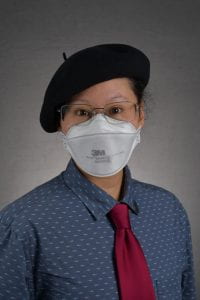
A nonbinary person with lighter brown skin wearing a blue shirt with maroon necktie, a white N95 mask, large rectangular glasses, and a black beret cocked to one side, looking toward the camera.

GIM (G McGrew)

he/they

Co-Director

College of Science & Engineering

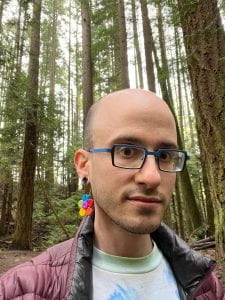
A selfie photo of a white man with a rainbow-colored flower earring and blue-rimmed glasses. He is wearing a jacket, and standing with a cloudy forest of trees in the background.

Andrew Lucchesi

he/they

Co-Director

Associate Professor, English

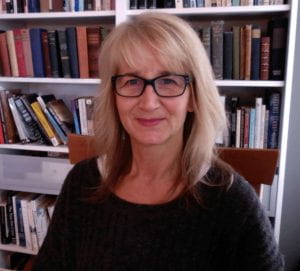
A woman with very pale hair wearing dark-rimmed glasses and sweater, sitting in a wooden chair in front of a bookshelf filled with old books

Allison Giffen

she/her

Spring 2023 Interim Co-Director, AY23-24 Curriculum Committee Chair

Faculty, English

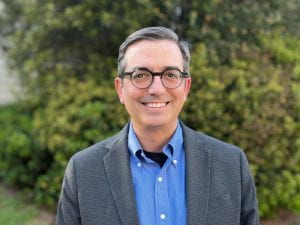
A Hispanic man with short salt and pepper hair and round glasses, smiling at the camera. He is wearing a blue collared shirt and grey blazer with a subtle grid pattern, and he is standing in front of green plants in the background.

Sean Bruna

he/him

Fall 2022 Curriculum Committee & Minor Task Force

A man with short blond hair and a grey sweater sitting outdoors

Daman Wandke

Outreach Committee

Instructor, Educational Leadership and Inclusive Teaching

Daman is teaching Critical Disability Studies (DISA 330) in Su 23

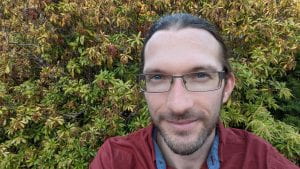
A white man with wide rectangular glasses and facial hair. His light brown hair is pulled back in a ponytail. He is wearing a maroon button shirt and smiling at the camera in front of a flowering shrub.

Tim Kowalczyk

he/him

Institute Advisory Council

Chemistry & Energy Studies

Elizabeth Boland

Curriculum Committee, Outreach Committee

Professor, Health and Community Studies

Tara Perry

she/her

Curriculum Committee

Professor, Department of Communication Studies, faculty affiliate to Institute for Critical Disability Studies and Women Gender and Sexuality Studies

Gretchen Rumsey-Richards

Outreach Committee

Deaf Hard of Hearing Service Manager 

Kristen Chmielewski

she/her

Outreach Committee

Faculty, Recreation Management & Leadership. Kristen taught our first DISA course offering in Spring 2023 (DISA 397A – Critical Disability Studies). 

Pam Kuntz

Outreach Committee

Senior Instructor, Dance

Kat DeNicola

she/her

Programming Committee Chair

Access Manager, Disability Access Center

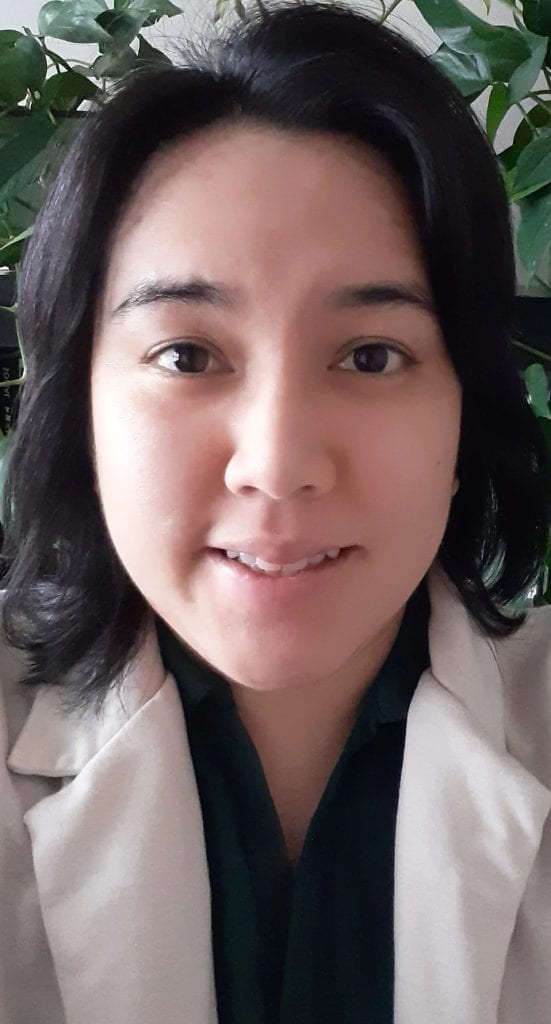
Asian gril wearing a black blazer and a red blouse smiling.

Hidemi Mitani Shen

she/her


Graduate Teaching Assistant

Graduate Student, Computer Science. Hidemi has dedicated her time as a GTA by assisting in the execution of the UnConference, and to create the SAC to foster a space for students to have a safe space. She is also a co-editor for the Annual Showcase.

Spike Osadchuk

Graduate Teaching Assistant

Graduate Student, Anthropology. 

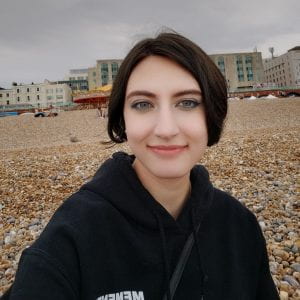
Picture of Ananda Trujillo; a fair skinned person wearing a black hoodie and blue makeup with short brown hair at a rocky beach on a cloudy day.

Ananda Trujillo

they/them


SAC Co-President

4th Year Student, Psychology. I first found out about disability studies courses at WWU in fall 2020 when I took EXCE 205 Disability, Diversity, and the Mass Media with Professor Wandke. It completely reformed my thoughts about disability, and I couldn’t engage with media without thinking about this class. It made me want to learn more so I took several other courses in this discipline. I started getting involved in the ICDS in the winter of 2021. Now, I am one of the co-presidents of the ICDS Student Advisory Council. Being disabled myself, I am very passionate about this work and helping more WWU students gain access to the field of critical disability studies.


Creative and Scholarly Submissions from the ICDS Community

The ICDS is proud to share creative and scholarly work from both students and faculty at WWU.

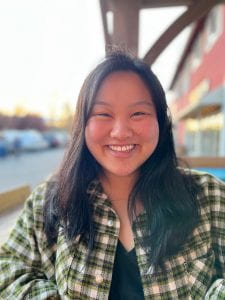
Picture of Lilyanna Sullivan, a queer Chinese adoptee, smiling.

Women of Color with Visible Disabilities Face In Western Washington

by Lilyanna Sullivan


My name is Lilyanna Sullivan. As a queer Chinese adoptee, I find the intersections of race, gender, class, and ability vital to understanding ways people can truly make a positive change. As a disability advocate and someone who has worked extensively with the disabled community, I believe that the disabled community is totally and completely underserved. With my work, I hope to shed light on the challenges people with disabilities face. To read the full paper, you can access it here.

Abstract

The proposed research investigates the experiences that women of color with visible
disabilities (WOCWVD) have had in Western Washington. It asks, what is the range of
visible disabilities of women in Western Washington? What types of barriers do they
face? How are their experiences impacted by race and ethnicity? There is very little
research that has focused on their distinct experiences. Rather, previous research on
WOCWVD have either focused on white women with disabilities, (Davidson, 2013) or
people of color with disabilities as a whole group (Johnson & Lambrinos, 1985). There
has been hardly any research on women of color with visible disabilities specifically. By
creating a better understanding of the specific perspectives and experiences that
WOCWVD have, this research will deconstruct the damaging and colorless paradigms
surrounding the experiences that WOCWVD face which reduces/combines WOCWVD’s
experiences to only what white women with visible disabilities have experienced. Given
the triple jeopardy that WOCWVD face, it is imperative that we understand their
experiences of barriers in their daily lives to better meet their needs. Qualitative data in
the form of formal interviews and participant observation with WOCWVD that live in
Western Washington will be used. Formal interviews and participant observation will be
harnessed to better recognize how they understand, feel, cope, and experience the
obstacles they face. The participants will engage in both the formal interview and
participant observation. This will be used to generate a better understanding of the
experiences that WOCWVD have had so that we can better serve and represent these
specific women in our Western Washington community by creating valuable policies that
reduce barriers, create opportunities, and improve their quality of life.

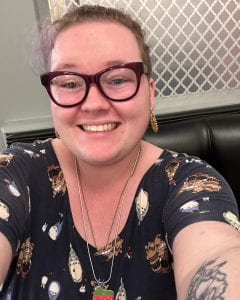
Selfie of Violet Smith, a fair skinned person, wearing glasses, smiling.Fibromyalgia and Chronic Pain in Academic and Professional Settings
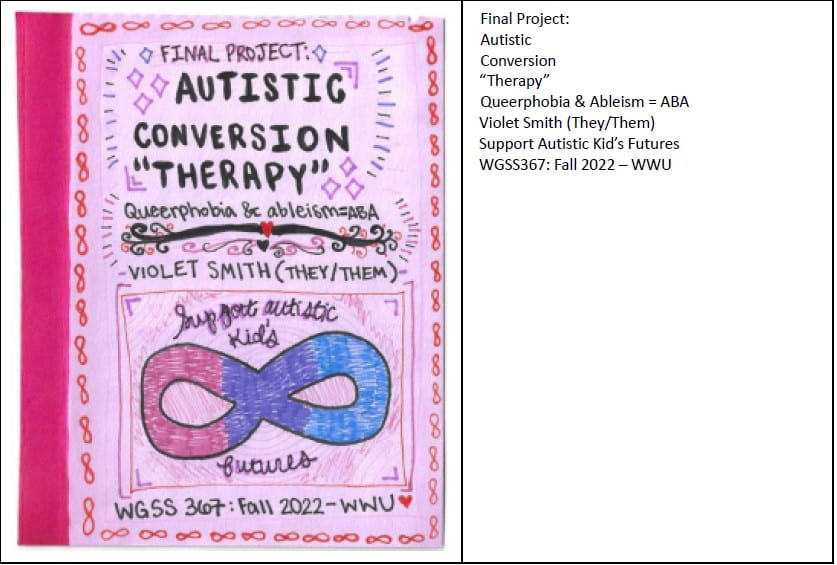
by Violet Smith


My name is Violet Smith (they/them), and I am studying Women, Gender, and Sexuality Studies and Critical Disability Studies. I am passionate about consent and sexual health and wellness education, supporting survivors of sexual and domestic violence, and disability justice. I believe the personal, political, and academic can all intersect in a way that makes the world a better place. I am excited to be a part of such change.  To read the full paper, you can access it here.

Introduction

Fibromyalgia can be defined as “a syndrome characterized by chronic widespread pain,
joint stiffness, sleep disruption, and other systemic symptoms, including mood disorders, fatigue,
and cognitive dysfunction.” (Chen, Carpenter, Flaherty, 2019) “People with fibromyalgia likely
have sleep disorders; severe changes in mood and thinking, depression and chronic anxiety;
headaches; impaired memory; irritable bowel syndrome (IBS); multiple chemical sensitivity
(MCS); restless legs, skin and temperature sensitivity; and tingling” (Job Accommodations
Network, 2022) What are the impacts of fibromyalgia? How can we be more accommodating of
people with fibromyalgia, chronic pain and other disabilities in academic and professional
environments?

Queer Autism Zine
by Violet Smith

You can access the whole project here.

Queer Autism Zine

Editorial Staff and Thanks

The ICDS is grateful for the work of the student editors who helped to make the Disability Studies & Action Collaborative 2023 Annual Showcase happen.  The 2023 Annual Showcase was compiled and edited by Rachel Kleffman and Hidemi Mitani Shen.

Mark West Scholarship Available! – Application deadline Friday June 02, 2023

The Institute for Critical Disability Studies is now accepting applications for the Mark West Scholarship to be disbursed this Fall 2023! The deadline for applications and letters of recommendation is 11:59 pm on Friday, June 02, 2023.

Learn more and apply here:

Mark West Scholarship

Scholarships 2023, Mark West Scholarship, scholarships and internships

First DISA course available for Spring 2023!

Posted Feb 2023

The Institute for Critical Disability Studies is excited to announce a brand new offering in Critical Disability Studies for Spring 2023… and celebrate our first official DISA prefix course! Special thanks to the DS Minor Task Force, ICDS Curriculum Committee, staff, and students who provided feedback during the development process.

About DISA 397A: Critical Disability Studies

DISA 397A: Critical Disability Studies is a 5-credit course being offered by the Institute for Critical Disability Studies this Spring at the WWU Bellingham campus. This course presents an interdisciplinary exploration of the field of Critical Disability Studies, and is appropriate for students of all majors and concentrations. Stay tuned for future offerings of this course with the permanent course number DISA 330 in AY 2023-4, with plans to offer multiple sections in face-to-face and remote/hybrid modalities.

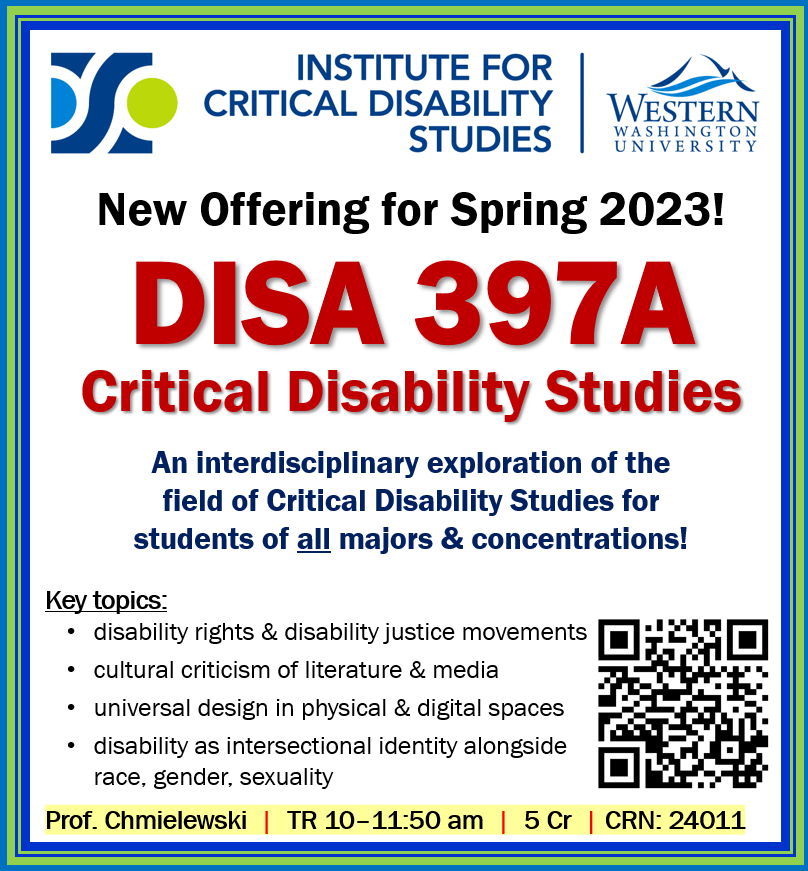
We hope that you will share this course information with students widely. A summary of the class details and a promotional graphic to share is included below.

Course Summary

  • DISA 397A – Critical Disability Studies (5 Credits) – Spring 2023
    • CRN: 24011 (cap: 32)
    • Meeting: TR 10-11:50am, face-to-face, B’ham campus
    • Instructor: Kristen Chmielewski
    • Prerequisites: ENG 101

Catalog Description

This course provides an exploration of the field of critical disability studies. Students will learn about several central topics, including disability rights and disability justice movements, cultural criticism of literature and popular media, and the principles of universal design in physical and digital spaces. Students will explore disability as an identity category that intersects with other identity categories such as race, gender, and sexuality. This is an interdisciplinary course designed for students from any major.

Click to download the DISA 397A promo graphic shown below (opens in a new tab).

Promotional graphic advertising the Institute for Critical Disability Studies' new Spring 2023 course, DISA 397A, Critical Disability Studies: an interdisciplinary exploration of the field of Critical Disability Studies for students of all majors and concentrations! Key topics include disability rights and disability justice movements, universal design, disability as intersectional identity, and cultural criticism of literature and media. Professor Chmielewski, Tuesday and Thursdays from 10 am to 11:50 am, 5 credits. Course CRN number 24011.

Suggested alt text: Promotional graphic advertising the Institute for Critical Disability Studies’ new Spring 2023 course, DISA 397A, Critical Disability Studies: an interdisciplinary exploration of the field of Critical Disability Studies for students of all majors and concentrations! Key topics include disability rights and disability justice movements, universal design, disability as intersectional identity, and cultural criticism of literature and media. Professor Chmielewski, Tuesday and Thursdays from 10 am to 11:50 am, 5 credits. Course CRN number 24011.

-Posted by GIM, ICDS co-director

Disability Studies Institute, Disability Studies Minor 2023, Curriculum, DISA, Disability Studies Institute, Disability Studies Minor

Apply to be a 2023 ICDS Fellow

The WWU Institute for Critical Disability Studies supports faculty, staff, and community members with one-year fellowships to develop programs and carry out projects related to disability scholarship and advocacy. Each year, we build a cohort of five Fellows from differing professional and advocacy backgrounds. These fellows meet periodically throughout the calendar year to work together on their projects and learn from each other’s skills and interests.

Fellows are awarded $3,000 annually for their time in the program. This can be used for direct support as a personal stipend, or it can be used to support the project (for instance, paying research assistants or putting on an event). Fellows also consult with one or more Project Mentors.

ICDS Fellows Program Mission

The goal of the WWU ICDS Fellows Program is to create a venue where faculty, staff, and local community members can develop collaborative programs and initiatives related to disability scholarship and advocacy. 

About the Fellows Program

What do Fellows do?

As 2023 is our first year of this program, we do not have examples of projects, programs, or initiatives from previous cohorts. The list below includes some possible models you may want to consider, but this is by no means an exhaustive list.

  • Developing a community-focused event or program
  • Traveling to conduct research at an archive or to gather interviews from the community
  • Building a social network among activists and artists within a community
  • Creating an art project and sharing it with the public

While we would like you to have some ideas and general direction for what you’d like to do as a Fellow, you do not have to have a firm plan finalized in order to be accepted into the ICDS Fellows Program. Much of our early work in the Fellows Program can include planning and project development in consultation with Program Mentors and with the collective support of your peers in the Program.

Program Structure

The participation of Fellows in the Program is structured as follows:

  1. Each Fellow will submit an application in which they propose ideas and projects they are interested in working on for their fellowship period.
  2. Each fellow receives $3,000 for the calendar year. The awarded funds are typically distributed evenly across academic terms, but can be disbursed on a different schedule if requested. 
  3. Fellows will be assigned mentors based on their interests and project focus.  Fellows are expected to meet and check in regularly with their mentors during their project development stage.
  4. Fellows meet as a full cohort approximately once every other month throughout the calendar year, including once over the summer. These meetings will be hybrid, allowing both in-person and online participation.

Program Outcomes

This is a process-driven program, rather than a product-driven program. What this means is that you will be working toward a goal, but it is not vital that you finish the project within the year of the fellowship. Some projects may turn out to be too big and ambitious to finish in just one year. The Fellows Program is here to help you along the journey. 

There are two outcomes for the fellows program:

  1. In May 2023, we will ask you to write a 1-2 page introduction and summary of your ideas and project-in-progress, which we will publish in our annual ICDS Showcase newsletter. We will help you with any editorial support you should need. 
  2. In October 2023, we will invite you to give a 10-30 minute presentation about your work as an ICDS Fellow at the annual Disability Studies and Action Collaborative UnConference happening Saturday and Sunday, October 21 and 22, 2023. 

Meet the 2023 ICDS Fellows Cohort

Disability Studies and Action Collaborative Logo, in dark blue, blue, and green, implying letters I, C, D, and S using colors and negative space.

Erica Bigelow

I’m a philosophy PhD student at the University of Washington, and am working toward a graduate certificate in science, technology, and society studies. I hold a bachelor’s degree from Stonehill College in North Easton, MA, and a master’s degree from Miami University in Oxford, OH. I’m also a steward & organizer with UAW4121, and a philosopher-in-residence at Rainier Beach High school in Seattle. 

My academic interests are quite wide-reaching; they mostly lie at the crossroads of structural injustice, disability, social epistemology, feminist philosophies, affect, and applied ethics. Some of my current projects include an evaluation of the hermeneutical and phenomenological good that diagnosis can serve as, an examination of the ways that anger gets recapitulated as Madness and the unique harms that its bearer thus becomes subjected to, and, more recently, a paper exploring the harm perpetuated by characterizing the COVID-19 pandemic through militaristic metaphors. 

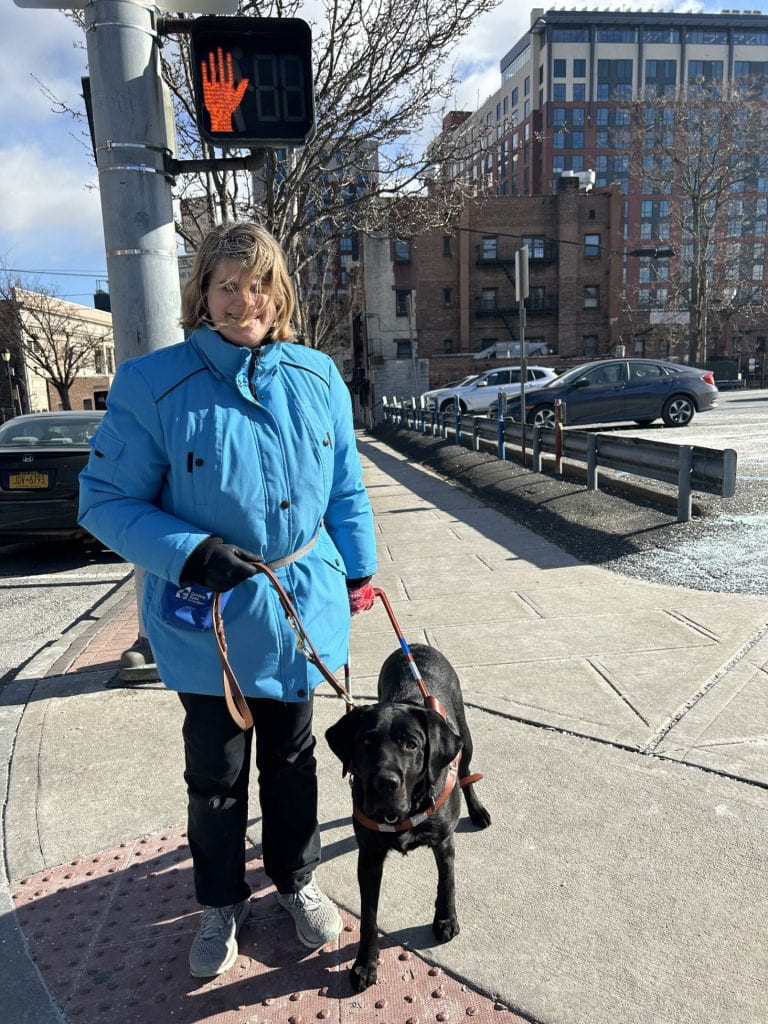
A blonde-haired woman in a sky blue winter coat is standing at a city crosswalk and smiling with eyes closed with a black guide dog at her side.

Kat DeNicola

she/her

I received my Master’s degree in Counseling Education with a Rehabilitation specialty in 2014 from Portland State University. I have experience working in the vocational rehabilitation field, teaching assistive technology, and working with disabled college students which is what I currently do as an Access Manager at the WWU Disability Access Center.

One of the strongest messages disabled people receive from society is that we are broken. We are often viewed as less-than, as burdens. These judgments result in assumptions of what we can and cannot do, and thus what we are allowed and not allowed to do. As a totally blind woman, I believe the disabled body is something to be celebrated. We find ways to dance, to nurture, to create, to play sports, to make love, … And in our current climate where physical attacks on members of minority groups are increasing, we have the right to find ways to defend ourselves. The goal of my project is to provide general awareness and training to local self defense instructors on adapting their teaching techniques so that any disabled person can access training specific to their needs in an inclusive and accessible environment.

Disability Studies and Action Collaborative Logo, in dark blue, blue, and green, implying letters I, C, D, and S using colors and negative space.

Erin Howard

they/them

Research Scientist/Engineer with the Vera C. Rubin Observatory at the University of Washington

Erin is a genderqueer and neuroqueer disabled scientist working for the Rubin Observatory at the University of Washington. They graduated from Western Washington University in June 2022 with a Bachelor of Science in physics and math/computer science, with minors in astronomy and statistics. Their time at Western was spent advocating for disabled students and working with the College of Science and Engineering through the Student Ambassadors Program to help make classrooms more accommodating to everyone. In their free time, Erin works with the University of Washington’s Disabilities, Opportunities, Internetworking, and Technology (DO-IT) program as a panelist talking about the life of a disabled student and worker. University of Washington

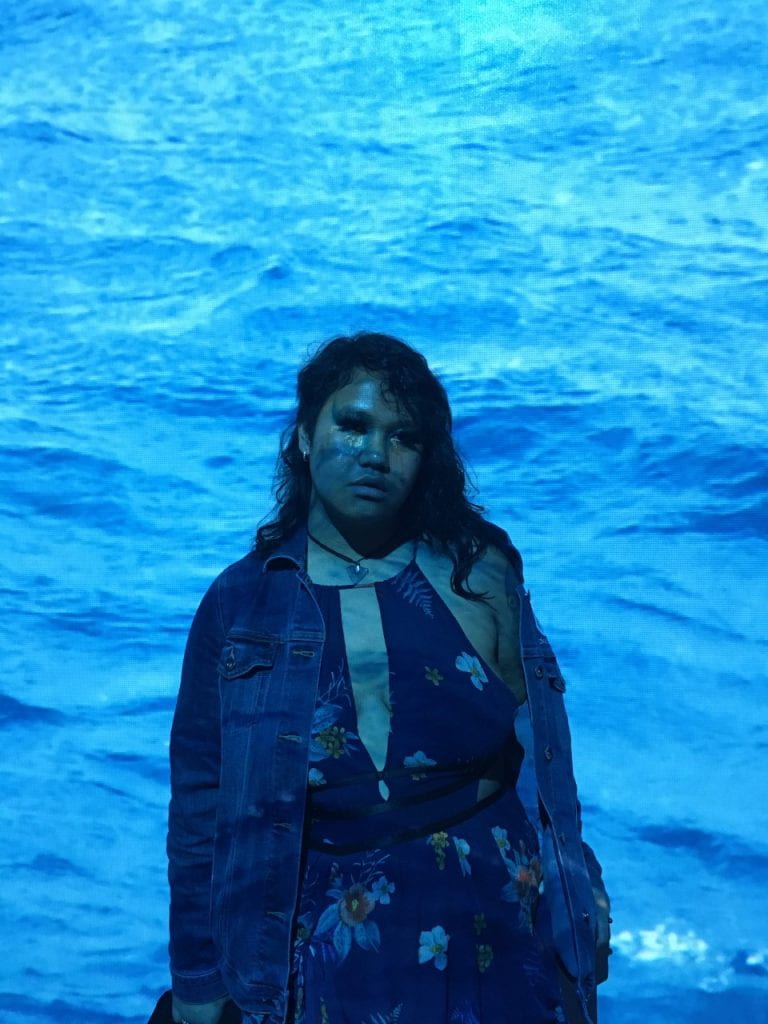
A photo all in tones of blue. A person with dark skin and long, dark hair is wearing a blue floral dress and denim jacket and standing in front of an ocean backdrop that is projecting shades of blue on their face and skin as well.

Jzy ||All Pronouns|| (Jazmine Joy De Leon Balila/Yeeles)

Z devised their concentration in Declaration of Interdependence: Reclamation, Remediation, and Creation, minoring in Chemistry. They exist and operate in scalars–broadening perspectives and inviting specifications into moments and cases. She is of the ocean, space, and the elements. He devotes himself to timelessness and presence.

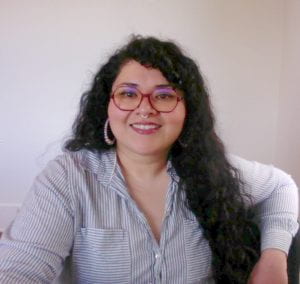
A selfie of a feminine person sitting and smiling at the camera, with magenta-rimmed glasses, pearl earrings, long wavy black hair, and grey and white striped button shirt.

Melina Juárez Pérez 

she/they

Assistant Professor, Political Science and Women, Gender, & Sexuality Studies

Melina Juárez Pérez is an Assistant Professor in Political Science and Women, Gender, and Sexuality Studies. They were born and raised in the Central Valley, California in a Mexican immigrant farmworker community. Their work focuses on the lives, health, and happiness of Latinx and BIPoC communities, particularly that of fat, disabled, queer, and women folk. Her time as a CDS Fellow will be spent on examining the ways disability functions within Latinidad and how it shapes relationships among Latinxs.  


Getting Involved

Fellows: How to apply to the ICDS Fellows Program

Applications are due 11:59 pm on Monday, January 02, 2023.  The application form is at the bottom of this page. Finalists will be interviewed in the first half of January.

Apply to the ICDS Fellows Program

How to become a Project Mentor for the ICDS Fellows Program

Fellows are partnered with one of five ICDS Fellows Mentors, who are faculty, staff, or community member mentors with expertise or experience in disability scholarship and/or advocacy. Mentors meet once or twice per month with their partner fellows to discuss their projects and offer support. Project Mentors are compensated $1,000 for the calendar year.

If you are interested in serving as a mentor, please contact icds@wwu.edu so that the ICDS co-directors can follow-up with your questions and set up a phone call or Zoom meeting.


Contact us

Please contact icds.fellows.program@wwu2.onmicrosoft.com with any questions


Institute for Critical Disability Studies Fellows Application

Applications for the ICDS Fellows Program 2023 Cohort has closed.
Please check back again in October 2023 for information on the next application cycle!

Application deadline: 11:59 pm, Monday, January 02, 2023

ICDS Fellows

This form is protected by reCAPTCHA and the Google Privacy Policy and Terms of Service apply.

Start Over

2025 UnConference Resources and Local Guide

This page contains useful links participants, including suggestions for getting around by bus and car, as well as local information and suggested accommodations.

    • Parking, Taxi, and Rideshare Information
    • Local Public Transit and Walking to the UnConference (opens in new page)
    • Hotel Accommodations for out-of-town visitors
    • Wi-Fi and Internet access
    • Building Maps
    • Other Local and on-campus events and Resources

Drivers should use the south end of Parking Lot 19G as a drop off destination.  (GPS coordinates and Google maps link: 48.732392, -122.487142)

Parking on campus is FREE due to WWU Fall Family Weekend.  You may find close-proximity and accessible parking for the UnConference in lot 19G, which is directly across from the UnConference Academic West building.  Signs will be posted on West College Way, Wade King service road, Highland Drive, and 21st Street to direct vehicles.

Map of the Western Washington University campus. There is a parking lot reserved for UnConference attendees, Lot 19G, which can be accessed by turning on to Wade King service road from West College Way, and then turning right onto 21st Street at the T intersection at the Interdisciplinary Science Building. The path is indicated by red arrows on the map.

Parking map for the UnConference. Click to open a larger version of the map, or download a PDF of the map here.

Driving Directions

Hotel recommendations:

If you are flying in via SeaTac (SEA), one option is the Four Points Sheraton (www.fourpointsbellingham.com), which has a WWU discount rate and Airporter Shuttle service to and from SeaTac airport (www.airporter.com/shuttle). This hotel is adjacent to a Fred Meyer market and pharmacy, across the street from a Whole Foods Market, and next to a bus line, stop ID 3294 (20 minute bus ride to campus is served every 30 minutes via route 197 Lincoln/WWU or 190 Downtown).

Note that if you are flying in via Bellingham (BLI), the hotel at the airport, Holiday Inn & Suites, does not offer area transportation or shuttle service.

Full list of lodging recommendations:

A list of accommodations near WWU with general price range, phone numbers, distance from campus, and whether a WWU discount can be found on the WWU Admissions page.

Click on the thumbnails below to open floor maps for the 2025 UnConference.  Click here to open floor-by-floor maps of AW as a downloadable pdf instead.

Map of the ground floor of Academic West building. The north end of the building has tables with check-ins, and information. Parking is to the West of the building in Lot 19G. There is a low-sensory room in AW 203.

AW map: Ground/2nd floor:  event check-in desk

Map of the middle floor of Academic West building, which will be used during afternoons of both days. Session 4 for both days are on this floor, as well as Session 3 on Day 2. Before the UnConference, the Pre-UnConference keynote will be held in AW 302. There is a low-sensory room in AW 303.

AW Map: Middle / 3rd floor: Oct 17 Pre-event keynote, and afternoon activities including Session 4, and Day 2 Session 3

Map of the top floor of Academic West building. Coffee, morning refreshments, Day 1 reception, and Lunch daily, as well as all in-person morning workshop sessions 1 and 2, and session 3 of day 1 are held on this floor. Restrooms on this floor are designated gender-neutral restrooms. There is a low-sensory room in AW 406, and a quiet meals room in AW 408.

AW map: Top/4th Floor: Day 1 & 2, and all meals

Guest Wireless Access Networks

Use the open wireless network WWUwireless-Guest to access web if you are a non-student.  Learn more about the WWU Wireless network here.

The secured wireless network eduroam can also be used if you are a University students from another participating institution.  Your university .edu login credentials will allow you to access this network.

Learn more at http://atus.wwu.edu and click on the icon for Wireless & Networking.   The direct link is here: https://atus.wwu.edu/kb/connecting-westerns-wireless-network

You are also invited to check out the many local shops and restaurants downtown.  In particular, there are many places to explore along Railroad avenue, the street directly next to the bus station.  Find more information on bus schedules throughout Bellingham here.  Railroad Avenue has free angle-in street parking after 6pm on Saturday, and all day Sunday.

What is also happening at WWU this weekend?

This weekend is also Fall Family Weekend at WWU. During the day, there will be tours and exhibits throughout campus.
For more information, visit foundation.wwu.edu/event/fall-family-weekend

Places to check out: Saturday Farmer’s Market (downtown)

The Bellingham Farmer’s Market  (www.bellinghamfarmers.org/) at Depot Market Square, 1100 Railroad Avenue, is an open-air community market with over a hundred vendors selling fresh food, produce, handmade goods, and more.  Hours are 10 am – 3 pm.  Some vendor stations may be in non-covered locations.

Places to check out: Ruckus room (downtown)

The Ruckus Room is on Railroad Avenue, just across the street from the Downtown Bellingham bus station.  The location has snacks and concessions, and classic arcade games, skee-ball, pinball, and prizes.

Ruckus Room: www.ruckusbham.com

Bellingham-area resources for accessibility needs

Below are some local resources that UnConference attendees can use if their service animals need care, their assistive technology needs repair or maintenance, or they need to connect with someone local for any other reason.

  • Bellevue Healthcare Whatcom County: www.bellevuehealthcare.com
  • Numotion wheelchair and mobility equipment and repairs: www.numotion.com
  • Hearing, Speech, & Deafness Center: www.hsdc.org
  • MudBay animal supplies: www.mudbay.com

Next Page »

I want to…

  • Read Recent Announcements
  • Check out our Past Events
  • Learn about the Critical Disability Studies academic program
  • Take DISA Classes
  • Minor in Critical Disability Studies
  • Discover ICDS Resources
  • Apply for Scholarships and Student Jobs

Upcoming Events for this month

There are no events for this month.

Full calendar of events

December 2025
S M T W T F S
« Nov    
 123456
78910111213
14151617181920
21222324252627
28293031  

Subscribe for Updates

Please, insert a valid email.

Thank you, your email will be added to the mailing list once you click on the link in the confirmation email.

Spam protection has stopped this request. Please contact site owner for help.

This form is protected by reCAPTCHA and the Google Privacy Policy and Terms of Service apply.

WWU’s main campus occupies the ancestral homelands of the Lummi Nation and Nooksack Tribe, Coast Salish Peoples who have lived in the Salish Sea basin and throughout the San Juan Islands and North Cascades watershed from time immemorial. We express our deepest respect and gratitude to our Indigenous neighbors for their enduring care and protection of our shared lands and waterways.

Western Washington University

516 High Street
Bellingham, WA 98225

(360) 650-3000

Contact Western

  • Western Facebook
  • Western Instagram
  • Western Flickr
  • Western Youtube
  • Western Today RSS

Accessibility | Privacy