Skip to main contentWestern Washington University Western Washington University
  • Calendar
  • Directory
  • Index
  • Map
  • myWestern
Refine search

Disability Studies and Action Collaborative

Disability Culture, Scholarship, and Community

Search
  • Home
    • DSAC Network
  • Institute
    • People
    • ICDS Student Advisory Council
    • ICDS DSAC 2023 Annual Showcase
    • ICDS Scholars Week
  • Academic Program
    • DISA Courses
    • Minor in Critical Disability Studies
  • Fellows Program
  • Student Employment & Scholarships
    • Mark West Scholarship
    • Scholarships for CDS Minors
    • Grad Teaching Assistantships
  • 2025 UnConference
  • Resources
    • Support and Discussion Groups
    • ICDS Student Advisory Council
    • Workshops and Resource Pages
  • Events and Announcements
    • Upcoming Events
      • DSAC Annual UnConference
      • Support and Discussion Groups
      • All Other Events
    • Past Events Archive
    • Newsletters and Reports

Search Results for: 2024

Ethical and Effective Attendance Policies From a Disability Perspective

This resource page emerges from a workshop presented by Elliott Hawley and Andrew Lucchesi for the Institute for Critical Disability Studies on March 8th 2024 at Western Washington University. Reach out for comments or questions to icds@wwu.edu

Edited Video of the Workshop

Find slides for the workshop here.

Introduction

This workshop was designed by the Institute for Critical Disability Studies to explore the topic of mandatory attendance policies through the lens of disability studies and advocacy. Attendance is a challenging issue, especially in our current moment when instances of class absence are at an all-time high (Times Higher Education). Many faculty are finding themselves trying to develop new policies to encourage students to participate in classroom learning, while they also aim to be sensitive to students’ needs. Everyone knows about the trouble with attendance policies–students fall behind, classroom activities don’t work as well, and faculty have to put in a lot of extra work to keep everyone able to participate and succeed. 

It would be nice if there were a silver bullet for this issue. However, the problem is individualized from class to class, from discipline to discipline. What works in a humanities seminar might not work in a science lab. And yet all faculty are held to the same basic university standard (access the WWU university policy here). 

A cartoon drawing of a group of disabled people. One is blind and has a guide dog and a white cane, others have prosthetic limbs. Some are using mobility devices like wheelchairs or crutches.

About the Workshop

We framed this workshop as an open-ended exploration of the topic of attendance policies from a disability-focused lens. In particular, we wanted to discuss:

  • What do disabled students think about mandatory attendance policies
  • What issues arise for faculty around attendance issues
  • What principles could guide faculty into more effective and equitable attendance policies

By starting with the voices of disabled students, we follow the disability-rights mentality of “nothing about us without us,” which means that decisions about how to respond to disability must always include disability perspectives. 

Disabled Student Perspectives

We interviewed several disabled students about their perspectives on accessibility policies, and we found some interesting results. You will find full details and quotations in the workshop video.

  • Students see the utility of mandatory attendance policies, explaining that they provided motivation for them to engage in the classes, show up, and participate
  • Students are sympathetic to the challenges frequent absences put on faculty in terms of the labor needed to adjust assignments or help students catch up on what they missed

Another important thread concerns the interpersonal dynamics of attendance policies. Some students reported feeling judged by faculty, for example, being treated as if they don’t care about their education. Some faculty are condescending about students’ maturity or professionalism. (We hope to do a workshop about the concept of professionalism in future years).

Faculty Perspectives

We lay out some key issues for faculty concerning mandatory attendance policies. 

Labor Issues

Many faculty feel overwhelmed by the amount of labor it takes to accommodate student absences. Challenges include things like assigning and reading make-up assignments, meeting for extra office hours, and interrupting grading schedules to accommodate extended deadlines. Faculty often feel required to do this labor without any extra compensation or support. The same is true when students request remote access to the class, such as live Zoom participation in class or recorded lectures, which also require extra labor, especially when faculty do not have expertise in the technology.

Judging Student Excuses

Faculty feel anxiety about the role they must play in judging whether student absences are appropriate or not. The university policy gives very little guidance in this regard. It lays out that university-sponsored activities should be excused (such as debate competitions), but it does not say what the standards should be for illness or persistent disability-related issues. Faculty are not trained to determine what constitutes a medical issue severe enough to warrant students being unable to attend class. Is a migraine sufficient? Are frequent bouts of depression? 

Many faculty rely on external authorities to help make these determinations, such as the disability resources office or the student health center. These can be useful sources for students with long-standing disability or illness issues, but many students have acute issues that cannot be documented through on-campus resources. At Western Washington University, for example, the student health center does not provide doctor’s notes for short-term illnesses such as the flu. Faculty often do not know the limits of these resources when they require doctor’s notes for excused absences. If you are coming from another institution, consider checking in with your student health center to find out about their policies for documenting student illness. 

A person in a wheelchair traveling over a cobblestone road with the view on the backpack they have slung over the back of their wheelchair. The back of their head is not in view.

Universal Design for Learning

The principles of Universal Design for Learning (UDL) offer an alternative to mandatory attendance policies and some of the issues they create. The basic principles focus on providing multiple ways for students to engage with the class in three areas:

  • Multiple means of engagement – students have options in what aspects of the course content they explore
  • Multiple means of representation – students have options in terms of how they take in the content of the course: readings, audio, lectures, activities
  • Multiple means of expression – students have options in terms of how they participate: remotely, aloud, in writing, synchronously, asynchronously

Attendance policies most clearly fit with the means of expression and representation categories. Does the class offer a variety of options for participating in the class, both inside and outside the hours for which the class is scheduled? Are there methods for taking in the material if they are not in the room? 

Here are some UDL approaches for providing accessible attendance strategies:

  • Note taking–Assign students to be daily note-takers and make their notes publicly available to all students. To assure quality, you can have two students take notes on the same day and make both versions available
  • Collaborative annotations–Use a tool such as Hypothesis or Google Documents to allow students to leave comments on a common reading. You can have them highlight within the texts, leave comments on interesting ideas, and respond to each others’ comments.
  • Sharing activity prompts for those who miss class–create a space on Canvas where activities and lesson plans can be posted
  • Share recordings and lecture slides of the class.

Model Attendance Policies

Several Workshop participants offered models of their attendance policies to be included in this resource page. Here are some common practices for managing attendance:

  • Explain in the syllabus the reasons for the attendance policy. This can be an opportunity to explain to students the kinds of labor that are involved in the class so they can make informed decisions about whether they can handle the commitment.
  • Focus on in-class participation. For example, several faculty members require daily quizzes or exit reports (brief summaries of the day’s activities), which receive credit. These serve to reward attendance without directly penalizing missed classes as excused or not excused absences.
Woman using sign language in front of a laptop computer

Bibliography

Joe Gerald and Benjamin Brady, “Time to Make Your Mandatory-Attendance Policy Optional?” The Chronicle of Higher Education, Jan 2019

The authors explore the effectiveness of letting students choose between two distinct attendance policies: one incentivizing attendance with extra credit and another mandating it with potential penalties for absences. They found that giving students this choice not only accommodated diverse student needs, particularly for nontraditional and potentially at-risk students, but also fostered a sense of responsibility, leading most to prefer a structured approach. The success of the policy is attributed to the initial commitment students make, aware of the consequences, which mirrors behavioral principles linking commitment to performance. This approach challenges traditional notions, treating students as self-regulating adults capable of making beneficial decisions regarding their educational engagement.

Melissa Nicolas, “Ma(r)king a Difference: Challenging Ableist Assumptions in Writing Program Policies,” Writing Program Administration Journal, vol 40(3), 2017 

Melissa Nicolas critiques the ableist foundations of mandatory attendance policies in writing programs, arguing they fail to accommodate the diverse realities of student bodies. Nicolas points out that such policies often assume a “normal” student body, thereby inadvertently penalizing students with disabilities who may struggle with what are considered routine tasks. She advocates for a shift from rigid policies to more flexible, universally designed strategies that acknowledge the complexities of student lives. Highlighting the potential for policies to either promote or hinder equity, Nicolas suggests, “Mandatory attendance policies… are premised on ableist assumptions” (Nicolas 11), urging writing program administrators to reevaluate and revise their approaches to foster a more inclusive academic environment.

Lydia X. Z. Brown, “Syllabus Language,” Sep 2017. https://autistichoya.net/resources/syllabus-language/.

Brown’s syllabus policy expresses commitments to principles inherent to UDL—multiple means of expression “I strive to provide information and resources in multiple formats (text, visuals, audio, silent work, group work, lecture, conversation, etc.) to enable more access possibilities for every student”. This syllabus focuses on minimizing disruption and limiting the need for adjudication of student’s requests: extensions are granted regardless of reason, and the syllabus expressly mentions that no explanation is required. This approach allows a student to self-advocate and get in a high-quality assignment without penalty. Ultimately, Brown’s policy centers on meeting the needs of their students by validating that they are people with busy lives, understanding that they can’t always access official accommodation routes, and can’t always conform to certain traditional expectations in academic settings.

Burgstahler, Sheryl, and Rebecca Cory, eds. Universal Design in Higher Education: From Principles to Practice. Cambridge, MA: Harvard Education Press, 2008.

Universal Design in Higher Education: From Principles to Practice suggests a format for group discussions based on a case study of a course. The course included differentiated discussion groups which provided choice and options for students. These discussions had different expectations and formats. Attending discussions and groups were one option for obtaining participation credits, although there were other options to receive these points, like taking notes. Each of these discussion group sessions were optional due to this structure. There were two general categories for these discussions: reviews and “advanced” discussions.

Review sessions focused more on the content of the week, giving students more context and guided review, as well as an opportunity to ask more questions and fill potential gaps in background knowledge. “Advanced” discussions assumed that students had done all of the outside reading and assigned additional material to read prior to the session. These additional readings could be controversial or even challenge previous course readings to give more depth to the discussion. The focus of these “advanced” discussions was on connecting ideas and going further into the granular detail of a given topic. The authors note that “10-15% of students show up for these kinds of sessions in a given week, although about 25% of students participate in them over the course of the semester. These are ideal sessions for students who find the lectures or readings tool elementary or concrete” (53). These discussions were also not all face to face, and indeed many were held online. The authors noted that using UDL principles to develop these discussions allowed for more engagement. “By providing options and multiple means for those discussions, we have found higher rates and quality of engagement in these aspects of the course” (53).


To share your thoughts on this workshop or these resources, please reach out to icds@wwu.edu

Visiting Lecture and Q&A: Audio Description with Krishna Washburn from Dark Room Ballet

Join the Institute for Critical Disablity Studies for a public guest lecture workshop by Krishna Washburn on Audio Description for Dance as a part of Disability Moves, a DISA 350 Topics in Critical Disability Studies course, on Thursday, February 22, 2024, at 10:00 am Pacific Time.  You can learn more about Dark Room Ballet with Krishna Washburn here (link).

Krishna will present for about 80 minutes, and then there will be a 15-minute Q&A with student questions curated by DISA 350 instructor Prof. Pam Kuntz.

The lecture and Q&A will be open to friends of ICDS attending the event remotely over Zoom.

  • Join Zoom Meeting here: https://us06web.zoom.us/j/88218810150?pwd=nDu3nmZ5m0QESWhu6IR2FsaLxE918y.1
  • Meeting ID: 882 1881 0150
  • Passcode: 692348

ICDS Scholars Week

The ICDS will once again be hosting events and programs for WWU Scholars Week. Scholars Week 2025 will take place May 12th – 16th. 

ICDS Keynote Presentation

We will be hosting a keynote presentation to kick off scholars week. An announcement about specific dates and speaker details will be coming by the end of March.

Scholars Week Events for Students

The Institute for Critical Disability Studies is hosting its second WWU Scholars Week Showcase for students. We are so excited to show off all of the amazing work that has been happening in our DISA courses, our electives hosted around the university, and beyond! 

Any student is invited to participate, though we will give special priority to students from the Critical Disability Studies minor. We will have two features for this year’s Scholars Week.

ICDS Digital Student Archive

We have launched a new digital platform to archive the work our students do every year. Submissions can be in any form and any length, including essays, reports, posters, videos, audio recordings, and websites. These pieces will live on this public archive where others can enjoy them into the future. This work does not have to be just from the previous year. All work is welcome. 

ICDS Scholars Week Student Showcase

We will hold a hybrid online and in-person event during Scholars Week (May 12-16). The specific date has not yet been decided (coming soon). We will ask everyone who participates to give a 5-10 minute presentation. You can either read your work aloud or show a pre-recorded video. If you have other kinds of work you want to share, such as if you want to display visual art or you want to stage a performance, just let us know in the form below. Note that we are prioritizing work that was completed in the last year, so Spring, Summer, and Fall 2024, and Winter and Spring 2025. 

Want to Join In?

The ICDS Scholars Week Committee is accepting submissions until April 20th, 2025 at 11:59pm using the form below. If you would like to secure your place on the Scholars Week Panel early, you can submit by the early priority deadline of April 1st, 2025 at 11:59pm. Student Panel presenters who submit by the early deadline can also receive coaching and feedback from the committee. 

ICDS Scholars Week Student Submission Form

ICDS Scholars Week Student Submission Form

Use this form to submit your work to be included in the ICDS Digital Student Archive and/or to apply to present your work live at the 2025 Scholars Week Student Panel.

Apply by April 1st at 11:59pm for Student Panel presenters to get an early decision and to request coaching. Final deadline for submissions is 11:59pm on April 20th.

I would like to submit my work… *
We are offering the opportunity for students interested in presenting at the ICDS Scholars Week Student Panel to have a one-on-one coaching and feedback session. This opportunity is only open to students who submit their work by the March 15th early submission deadline.

Maximum file size: 52.22MB

This form is protected by reCAPTCHA and the Google Privacy Policy and Terms of Service apply.

Film Screening – The Dancing Man: Peg Leg Bates – free for Western Students!

At 3:00 pm on Sunday, February 11 at the Firehouse Arts & Events Center in Fairhaven, we are excited to be sharing another screening from Kuntz and Company’s Documenting Grace film festival: The Dancing Man, a 1992 documentary film about tap dancer Clayton “Peg Leg” Bates.

For this ICDS-sponsored screening, WWU Students can get their tickets for free! Non-student friends of the Institute for Critical Disability Studies: use the code “ICDS” to get discounted tickets for only $3.00!

Tickets: available in advance through the Kuntz & Co. ticket portal here, or at the door.

“The Dancing Man-Peg Leg Bates” brings to the screen the remarkable story of the legendary tap dancer and entrepreneur, Clayton “Peg Leg” who broke down barriers for Black Americans and all people with disabilities. The arc of Bates’ epic career stretches from Southern minstrel shows to the golden age of television when he entered America’s living rooms as a regular on the Ed Sullivan Show. 

The enormous impact of Peg Leg Bates on Black culture, and by extension American culture, is summed up by Ruth Brown, “In those days, there were two great things for Black people. One was that Peg Leg Bates was going to be on television and the other was that Joe Louis was going to fight.”


A Film By Dave Davidson
Sunday February 11th, 2024
3:00 PM Firehouse Arts and Events Center
1314 Harris Avenue
Fairhaven
Bellingham, WA

Promotional poster for film on February 11 at 3:00 pm at the Firehouse Arts Center. There is a black and white photo of a young adult black man in a suit posing with hands behind the ack, with a wooden left leg below the knee. The poster reads, Kuntz and Company presents The Dancing Man, Peg Leg Bates.
Image Description: Promotional poster for film on February 11 at 3:00 pm at the Firehouse Arts Center. There is a black and white photo of a young Black man in a suit posing with hands behind the back, with a wooden left leg below the knee. The poster reads, Kuntz and Company presents The Dancing Man, Peg Leg Bates. For information or disability accommodations contact Pam Kuntz at 360-510-4711 or kuntzpam@gmail.com. Sponsored by Institute for Critical Disability Studies. WWU students Free!

ICDS Graduate Teaching Assistantship positions

The Institute for Critical Disability Studies is hiring for two to three graduate teaching assistant (GTA) positions in Fall 2023, Winter 2024, Spring 2024, and/or the full 2023-24 academic year! Full-time (20 hr/wk) salaried, half-time (10 hr/wk) salaried, and hourly (5-9 hr/wk) nonsalaried positions available.

Learn more and review the GTA position information and application instructions here.

Institute for Critical Disability Studies Logo, with an abstract graphic on the left side in blue, dark blue, and green, implying letters I, C, D, and S. The Western Washington University logo is on the right side.
Institute for Critical Disability Studies logo

Disability Studies Institute, Graduate Teaching Assistantships, Jobs 2023, Disability Studies Institute, Graduate Teaching Assistant, GTA, jobs, Student Employment

From the Archives – Introducing the Minor in Critical Disability Studies

This page was originally created in Fall 2022 to introduce our new Minor in Critical Disability Studies to the Disability Studies and Action Collaborative and newly-formed Institute for Critical Disability Studies community. People interested in learning more about the program could read or watch the video and provide feedback to the co-directors in advance of the Minor going live.

The long-awaited Minor was approved soon thereafter, and the codes to declare were activated in April 2023, so we were finally set to formally open the program for the Fall 2023 academic year. We found that many students were quite excited to be able to declare the Minor, so much so that we actually had four students declare the minor early, in Spring and Summer 2023. By the end of Fall 2024, 25 students had declared, from First-year to Senior.

The following contents for the page are an archived description of the Minor as we were planning it in 2022. Our program has expanded significantly since then. If you’d like to read our most up-to-date description and information on the minor, please visit our current Minors page here.


Introducing the Minor in Critical Disability Studies (introductory video as it was in development)

The Institute for Critical Disability Studies proposed a new minor to launch in Fall 2023. We created this video so that you could learn more about it before it was launched.

After visitors finished the video, they were invited to give ICDS feedback using the form at the bottom of the page.

Download the PowerPoint slides of this presentation, which includes the script, through this link.

If you want to find out more about the minor or the Institute for Critical Disability Studies, contact icds@wwu.edu

Click to join the Disability Studies and Action Collaborative Outlook group for email, newsletters, and events
Feedback on the Minor Preview

Please provide some feedback on our minor in critical disability studies

The WWU Institute for Critical Disability Studies would love to get your feedback on our program and critical disability studies minor.

Contact information, optional:

Clear my responses and start over

This form is protected by reCAPTCHA and the Google Privacy Policy and Terms of Service apply.

People – Institute for Critical Disability Studies

Institute for Critical Disability Studies Co-Directors

The ICDS is currently headed by two half-time co-directors. Andrew (English), and GIM (College of Science and Engineering) are faculty at WWU. You can contact them at ICDS@wwu.edu.

Disability Studies and Action Collaborative Logo, in dark blue, blue, and green, implying letters I, C, D, and S using colors and negative space.

Kristen Chmielewski

she/her

Faculty, Recreation Management & Leadership
Teaches: DISA 330

A nonbinary person with lighter brown skin wearing a blue shirt with maroon necktie, a white N95 mask, large rectangular glasses, and a black beret cocked to one side, looking toward the camera.

GIM (G McGrew)

he/they

Senior Instructor, College of Science & Engineering

Teaches: DISA 350

Find office hours for Co-directors, Graduate Assistants, and Faculty teaching DISA courses here

Affiliated Members

The diverse faculty, staff, students, and community members who contribute to the critical disability studies program represent colleges and departments across Western Washington University as well as collaborators outside of Western.

WWU Faculty and Staff

Disability Studies and Action Collaborative Logo, in dark blue, blue, and green, implying letters I, C, D, and S using colors and negative space.

Elizabeth Boland

Professor, Health and Community Studies

Disability Studies and Action Collaborative Logo, in dark blue, blue, and green, implying letters I, C, D, and S using colors and negative space.

Kathleen Brian

Senior Instructor, Global Humanities and Religions
Teaches: DISA 450, the Capstone in Critical Disability Studies

Disability Studies and Action Collaborative Logo, in dark blue, blue, and green, implying letters I, C, D, and S using colors and negative space.

Kat DeNicola

she/her

Access Manager, Disability Access Center

A woman with dark, shoulder-length hair and small golden earrings, wearing a black blazer, and white and blue floral top. She is standing in front of a tree bearing red fall foliage and is smiling at the camera.

Yasmine Elglaly

Assistant Professor, Computer Science
Teaches: Critical Disability Studies Minor elective: Accessible Computing

Yasmine’s webpage

Disability Studies and Action Collaborative Logo, in dark blue, blue, and green, implying letters I, C, D, and S using colors and negative space.

David Engebretson

he/him

Digital Technologies Accessibility Coordinator

Disability Studies and Action Collaborative Logo, in dark blue, blue, and green, implying letters I, C, D, and S using colors and negative space.

Kyann Flint

Instructor, Critical Disability Studies
Teaches: DISA 330, DISA 350 Topics in Critical Disability Studies

Disability Studies and Action Collaborative Logo, in dark blue, blue, and green, implying letters I, C, D, and S using colors and negative space.

Lindsay Foreman-Murray

Assistant Professor, Educational Leadership and Inclusive Teaching
Teaches: Cross-listed DISA 350 Topics in Critical Disability Studies

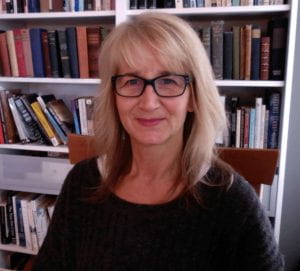
A woman with very pale hair wearing dark-rimmed glasses and sweater, sitting in a wooden chair in front of a bookshelf filled with old books

Allison Giffen

she/her

Faculty, Women, Gender, and Sexuality Studies
Teaches: Electives for Critical Disability Studies Minor

Allison’s webpage

I am a professor in the English department and specialize in 19th-century American literature and culture with an emphasis in disability studies and critical childhood studies. My current research in explores the intersections of race, disability, and childhood in late 19th-century literature.
Note: Allison was our Interim Co-director in Spring 2023

A white man with wide rectangular glasses and facial hair. His light brown hair is pulled back in a ponytail. He is wearing a maroon button shirt and smiling at the camera in front of a flowering shrub.

Tim Kowalczyk

he/him

Chemistry & Energy Studies

Tim.Kowalczyk@wwu.edu
Tim’s webpage

A woman with short wavy gray hair and glasses and wearing a red tank top is smiling and walking forward in front of an audience of seated elderly people

Pam Kuntz

she/her

Dance Program Advisor / Senior Instructor
Teaches: DISA 350, a core Topics course in the Critical Disability Studies Minor

pam.kuntz@wwu.edu
Pam’s webpage: kuntzandco.org

Disability Studies and Action Collaborative Logo, in dark blue, blue, and green, implying letters I, C, D, and S using colors and negative space.

Ceci Lopez

Assistant Professor of Law, Fairhaven
Teaches: Cross-listed DISA 350 Topics in Critical Disability Studies: Disability & Law

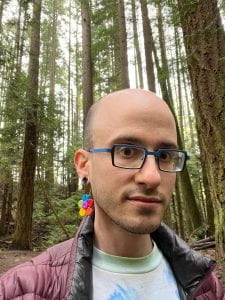
A selfie photo of a white man with a rainbow-colored flower earring and blue-rimmed glasses. He is wearing a jacket, and standing with a cloudy forest of trees in the background.

Andrew Lucchesi

he/they

Associate Professor, English

Teaches: DISA 330, DISA 350, DISA 450

Disability Studies and Action Collaborative Logo, in dark blue, blue, and green, implying letters I, C, D, and S using colors and negative space.

Scot Nichols

Fairhaven College

A man with short hair and slight beard wearing a jacket, sweatshirt, and jeans, standing with hands in pockets

Joseph Mogharreban

he/him

Director, Disability Access Center

mogharj@wwu.edu

Disability Studies and Action Collaborative Logo, in dark blue, blue, and green, implying letters I, C, D, and S using colors and negative space.

Tara Perry

she/her

Professor, Department of Communication Studies, faculty affiliate to Institute for Critical Disability Studies and Women Gender and Sexuality Studies

perryt@wwu.edu

Disability Studies and Action Collaborative Logo, in dark blue, blue, and green, implying letters I, C, D, and S using colors and negative space.

Candice Styer

Instructor of Special Education, Woodring

A fair-skinned nonbinary person with short light-brown hair, maroon framed glasses, and ear rings smiling at the camera in front of a nature background. They are wearing a grey collared shirt with green paisley neck tie.

Anika Tilland-Stafford, PhD 

they/them

Senior Instructor, Women, Gender, and Sexuality Studies & Honors College
Teaches: DISA 330, Critical Disability Studies

Office: Miller Hall 415D

Disability Studies and Action Collaborative Logo, in dark blue, blue, and green, implying letters I, C, D, and S using colors and negative space.

Adrian J. Villicana

Assistant Professor, Social Psychology, Fairhaven

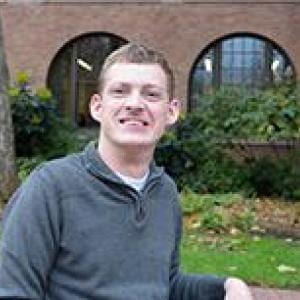
A man with short blond hair and a grey sweater sitting outdoors

Daman Wandke

Instructor, Educational Leadership and Inclusive Teaching
Teaches: DISA 330 Critical Disability Studies and DISA 350 Topics in Critical Disability Studies; Electives for the CDS Minor; DISA 201 Stories of Disability in the World

Contact: wandked@wwu.edu

Collaborators and Community Members

Disability Studies and Action Collaborative Logo, in dark blue, blue, and green, implying letters I, C, D, and S using colors and negative space.

Pau Abustan

||All Pronouns||

Formerly Visiting Assistant Professor, Women Gender, and Sexuality Studies

A Hispanic man with short salt and pepper hair and round glasses, smiling at the camera. He is wearing a blue collared shirt and grey blazer with a subtle grid pattern, and he is standing in front of green plants in the background.

Sean Bruna

he/him

Sean’s webpage

Graduate Teaching Assistants

Graduate TAs assist the operations of the Institute in many invaluable ways, including event logistics and planning, course and curriculum feedback, office hours, and student mentorship and leadership organizing.

Disability Studies and Action Collaborative Logo, in dark blue, blue, and green, implying letters I, C, D, and S using colors and negative space.

Fred Engelfried

Graduate Student, Environmental Studies / Urban Planning

ICDS GTA Fall 2024 – Spring 2026

Disability Studies and Action Collaborative Logo, in dark blue, blue, and green, implying letters I, C, D, and S using colors and negative space.

Kat Smith

Graduate Student

ICDS GTA Fall 2025 – Spring 2026

Disability Studies and Action Collaborative Logo, in dark blue, blue, and green, implying letters I, C, D, and S using colors and negative space.

Pheonix Booth

Graduate Student

ICDS GTA Fall 2025 – Spring 2026

Disability Studies and Action Collaborative Logo, in dark blue, blue, and green, implying letters I, C, D, and S using colors and negative space.

Sam Carvalho

Graduate Student

ICDS GTA Fall 2025 – Winter 2026

Disability Studies and Action Collaborative Logo, in dark blue, blue, and green, implying letters I, C, D, and S using colors and negative space.

Maggie Minogue

Graduate Student

ICDS GTA Fall 2025

Our Previous ICDS Graduate Assistants

The ICDS is grateful for the work that our Graduate Assistants have done to help the Institute meet our growing and changing needs, from helping to plan and manage events, to TAing course in our Minor. We would like to acknowledge them here:

Photo of Sarah standing in a wood-toned performance space and smiling at the camera. She is a light-skinned woman with glasses and wavy brown shoulder-length hair, in a black sleeveless shirt, fingers of both hands joined to cradle the butt end of a silver and black clarinet that is leaning against her right shoulder.

Sarah Lucas-Page

she/her
Graduate Student, Music and Performing Arts
ICDS GTA Fall 2024 – Spring 2025

Sarah Lucas-Page is an award-winning composer and clarinetist who has dedicated her life to the art of music and activism… [read more]

Sarah Lucas-Page is an award-winning composer and clarinetist who has dedicated her life to the art of music and activism by continually pushing the boundaries of her creative expression. She has been creating and performing new clarinet music to help fight injustice and bring awareness to issues within the LGBTQIA+ community, Fat Body Politics, Women, and Neurodivergent people. Lucas-Page is pursuing her master’s degree in music composition at Western Washington University, studying with Dr. Charles Halka, Dr. Robert Hamilton, and Dr. Rachel Yoder. She is a Graduate Assistant for the Institute for Critical Disability Studies department and the music department.

Disability Studies and Action Collaborative Logo, in dark blue, blue, and green, implying letters I, C, D, and S using colors and negative space.

Lorraine Floyd

Graduate Student, Rehabilitation Counseling

ICDS GTA Fall 2023 – Fall 2024

Disability Studies and Action Collaborative Logo, in dark blue, blue, and green, implying letters I, C, D, and S using colors and negative space.

Eden Chapman

Graduate Student, Masters in Teaching
ICDS GTA Fall 2023 – Summer 2024

Disability Studies and Action Collaborative Logo, in dark blue, blue, and green, implying letters I, C, D, and S using colors and negative space.

Spike Osadchuk

Graduate Student, Anthropology
ICDS GTA Fall 2022 – Winter 2024

Asian girl wearing a black blazer and a red blouse smiling.

Hidemi Mitani Shen

she/her

Graduate Student, Computer Science
ICDS GTA Fall 2022 – Spring 2023

Find office hours for Co-directors, Graduate Assistants, and Faculty teaching DISA courses here

ICDS Committees

For questions about joining Institute for Critical Disability Studies standing committees, ad-hoc committees, and task forces, please email icds@wwu.edu.

Standing Committees

  • Curriculum Committee*
    • DISA coursework approvals and interdisciplinary minor in critical disability studies
  • Programming (Events) Committee*
    • ICDS and community events, workshops, lectures, and other projects
  • Development Committee*
    • grants and fundraising
  • Outreach Committee*
    • publicity & collaborative relationship-building
  • Scholarships & Awards Committee*
    • ICDS scholarships and Scholars Week student recognitions

Advisory Councils

  • Student Advisory Council*
    • a student-organized body of undergraduate and graduate students providing recommendations to the ICDS
    • Leadership positions are compensated: learn more at student employment
  • ICDS Advisory Council* (formerly Interim Advisory Council)
    • an advisory council to the ICDS co-directors consisting of internal and external members

General Membership & Community

  • Disability Studies and Action Collaborative Community* (formerly DS Steering Committee)
    • The DSAC Community is open membership: Use this quick-join link to join our Outlook group, or fill out our mailing list form.
    • Students, Faculty, Staff, Administrators, Alumni, and Community Members from all backgrounds and abilities are welcome!

Ad-Hoc Committees and Task Forces

  • DS Minor Task Force
    • Objective: Complete submission of disability studies minor paperwork and propose additional core classes for the minor
    • COMPLETED!
  • ICDS ADEI Statement Task Force*
    • Objective: Collaboratively finish the Institute’s statement on accessibility, diversity, equity, inclusion, and belonging

* = this committee is looking for additional members


Add or update my ICDS affiliation information

Working as a Graduate Teaching Assistant for the Institute for Critical Disability Studies

Call for Graduate Teaching Assistantships

The Institute for Critical Disability Studies (ICDS) is hiring graduate teaching assistants (GTAs) for the 2025-2026 academic year to support the Institute and its mission to promote disability studies coursework, host events that bridge he academic-community divide, and to support disability culture, awareness, and advocacy at Western Washington University.

We expect to hire two to three graduate students to serve in full-time salaried, half-time salaried, and/or hourly nonsalaried graduate teaching assistant (GTA) positions for individual Fall, Winter, and/or Spring quarters of 2025/26, and/or for the full 2025-2026 academic year (Fall, Winter, and Spring quarter).

The full details and application forms for this position can also be downloaded as a word document.

Application Deadline & Hiring Timeline

Application deadline for all 2025-26 ICDS GTA positions: 11:59 pm on Sunday, August 25, 2025.

Interviews for finalists will be conducted during the first week of September. Fall positions start on Tuesday, September 16, 2025.

Position Overview

ICDS GTA roles can span a broad range of support areas.  Responsibilities are decided with each GTA individually upon discussion and agreement between GTA and Institute Co-Directors.  Primary job responsibilities are intended to directly support the Institute, Critical Disability Studies coursework and minors, and the ICDS student community.

All GTAs hold regular weekly office hours (virtual or face-to-face), and serve as supporting members for the activities of the ICDS Student Advisory Council (SAC).  Specific additional responsibilities will be decided upon mutual discussion and agreement between individual GTAs and Institute Co-Directors in the areas of academic support, program support, and Institute support (see What are the GTA job responsibilities? section below). We will aim to choose work that both satisfies the ICDS needs and GTAs professional development goals. Specific roles may vary from quarter to quarter, depending on seasonal curricular and programmatic needs.

Example additional GTA responsibilities may include assisting with organizing events, web and social media work, and otherwise assisting with academic programming in Critical Disability Studies, including moderating discussions on disability-related topics and/or grading coursework within the Critical Disability Studies minor.

Position Details

Required qualifications

These are the minimum qualifications for working as an ICDS GTA. Meeting all of these qualifications is required in order to hire a candidate:

  • GTAs are expected to keep reliable and timely communication with ICDS co-directors and staff during business hours, including: email correspondence, responding to calendar invitations for scheduled meetings, and taking initiative to reschedule meetings that are missed.
  • GTAs should have experience in writing in genres including formal emails, event announcements, and profile articles. Clear prompts and coaching will be provided to improve your skills in this area.
  • GTAs must responsibly handle sensitive information, such as when working with confidential student or personal information and coursework.
  • GTAs must stay current on required WWU ADEI trainings and abide by ICDS policies on supporting accessibility, diversity, equity, and inclusion (ADEI).
Preferred qualifications

Meeting one or more of these preferred qualifications makes the student a stronger candidate for the position, but are not required to be hired:

  • Knowledge and experience in disability studies, advocacy, accessibility, and/or universal design is highly preferred, but not required.
  • Proficiency in writing in diverse genres, including blogging, social media, email, meeting minutes, and summaries of events is preferred, but not required.
  • Experience in student or community leadership, for example in a student club or community organization is preferred, but not required.
What are the GTA job responsibilities?

ICDS GTA roles can span a broad range of support areas.  Primary job responsibilities are intended to directly support the Institute, Critical Disability Studies coursework and minors, and the ICDS student community. All GTAs hold regular weekly office hours (virtual or face-to-face), and serve as supporting members for the activities of the ICDS Student Advisory Council (SAC). 

Additional specific GTA responsibilities will include a curated subset of the following listed roles in three main areas of support need.  Roles are determined for each GTA individually upon mutual discussion and agreement between GTA and Institute Co-Directors. We will aim to choose work that both satisfies the ICDS needs and GTAs professional development goals. Specific roles may vary from quarter to quarter, depending on seasonal curricular and programmatic needs

  • Academic support
    • Work with faculty teaching disability studies courses outside of class time by grading, providing feedback on writing, and/or moderating online discussions
    • Work with faculty teaching disability studies courses to assist during class time with classroom activities and/or moderating topical discussions
    • Holding office hours for students in disability studies courses
    • Work with faculty to design curriculum on disability-related topics, if needed
  • Program support
    • Designing and/or delivering professional development workshops
    • Leading community support group activities
    • Helping to organize ICDS guest speaker event logistics
    • UnConference support: During and in advance of our October event:
      • Organizing and facilitating the annual UnConference panels and workshops
      • Mentoring and/or supervising UnConference student workers
    • Coordinating event logistics such as food and room setup, or designing and printing materials
    • Co-hosting and representing ICDS at outreach and informational tabling events
  • Institute support
    • Keeping records and reporting to ICDS co-directors: this includes attending and taking notes on ICDS meetings
    • Writing blog posts and newsletter articles about the ICDS programs
    • Mentoring undergraduate student workers
    • Serving on standing committees
    • Serving in a mentor and advisory role to support the operations of the ICDS Student Advisory Council (SAC)
    • Interfacing with various offices and WWU student groups
Who can apply to be an ICDS GTA?

This position is open to all WWU graduate students regardless of disability status or field of study.

We are particularly interested in welcoming applicants with diverse and intersecting identities, particularly disabled, neurodivergent, chronically ill, BIPOC, queer and gender non-conforming individuals, and veterans.

Please note: If your graduate program is not state-supported (i.e. is offered through OCE, office of continuing education), you cannot received salaried GTA support and must apply for an hourly nonsalaried position.

Hours, pay, and benefits

Note: Due to funding, the ICDS GTA positions are only available as half-time salaried or hourly nonsalaried for AY 2025-26. We are not able to hire on full-time GTAs this year.

GTA positions are typically available as full-time salaried, half-time salaried, and hourly nonsalaried. The position requires approximately 20 hours per week for full-time appointments, 10 hours per week for half-time, and between 5-9 hours per week for hourly (non-salaried) positions.

Salaried GTAs will receive the standard pay and health insurance benefits of an academic graduate teaching assistant. Full-time and half-time salaried positions include full graduate tuition waivers.  Compensation for hourly nonsalaried GTA positions will be consistent with the current wage schedule for graduate assistants.

GTAs will report directly to the ICDS Co-Directors. Hourly GTA positions require timely reporting of hours through electronic time sheets maintained by the GTA and approved by the ICDS.

How to apply to be an ICDS GTA

To apply, submit your Resume/CV and the ICDS Graduate Assistant Application attached to the end of the Job Description word document; it includes basic applicant info, interest survey, and space for an approx. 1 page cover letter. Send documents to icds@wwu.edu and cc both mcgrewg2@wwu.edu and lucchea@wwu.edu “ICDS Graduate Assistant Application” and your last name.

The application and cover letter should explain the following information:

  • whether you are applying for the full-time (20 hours/wk salaried), half time (10 hours/wk salaried), or hourly nonsalaried GTA position (5 – 9 hours/wk)
  • what quarter(s) you are applying for: Full Academic year, Fall Quarter, Winter Quarter, and/or Spring Quarter
  • your home graduate department and your year in the program
  • whether there is any flexibility or uncertainty in your need for employment with the ICDS
  • describe your interest in the position and the personal experience that qualifies you for the position, including how you meet the job’s required and preferred qualifications
  • identify which subsets of the proposed job responsibilities you are most excited to take on under Academic, Programming, and Institute Support (see What are the GTA Job Responsibilities? under Position Details)

Applications are due 11:59 pm Sunday, August 25th.

Applications are currently OPEN

ICDS GTA Position Description 2025-26 (Word Document)

FAQ

Frequently asked questions about the ICDS Graduate Teaching Assistant positions

What is the difference between the full-time salaried, part-time salaried, and hourly nonsalaried appointments?

These appointments differ in salary, benefits, minimum enrollment to apply, and whether other campus jobs can be accepted simultaneously. Paychecks are disbursed twice a month).

  • full-time salaried: 
    • 20 hours/week ICDS Graduate Assistant Work
    • salary: $6024 per quarter paid in 6 installments
    • tuition waiver: Full (waiver does not cover student fees: full table of cost here)
    • benefits include health insurance
    • enrollment: must be enrolled full-time, or at least 8 credits per quarter of employment in a state-supported WWU graduate program
    • Other campus jobs: No other campus jobs can be accepted
      • generally, a graduate student is limited to 6 quarters of salaried GTA work through the WWU Graduate School.
  • half-time salaried: 
    • 10 hours/week ICDS Grad Assistant Work
    • salary: $3012 per quarter, in 6 installments
    • tuition waiver: Partial (full table of cost here)
    • benefits include health insurance
    • enrollment: must be enrolled full-time, or at least 8 credits per quarter of employment in a state-supported WWU graduate program
    • Other campus jobs: can be accepted, up to 9 hrs/wk
  • hourly nonsalaried:
    • 5 – 9 hours/week ICDS Grad Assistant Work
    • non-salaried hourly rate: consistent with the WWU wage schedule for graduate students
      • Student must record hours worked and submit biweekly time sheets that are then approved by the ICDS.
    • tuition waiver: None
    • student covers health insurance
    • enrollment: must be enrolled at least half-time, or 4 credits per quarter (graduate half-time)
      • Any WWU graduate student can be paid hourly, including grad students in continuing education (OCE) graduate programs.
    • Other campus jobs: can be accepted

Does a tuition waiver from a salaried graduate assistant position also cover fees?

No, the tuition waiver does not cover student fees: a full table of costs for 2023-2024 is linked here

Do I need to be enrolled as a full-time graduate student to work an ICDS GTA position?

For salaried (full-time and half-time) positions, you must be enrolled full-time, or 8 credits per quarter minimum, for each quarter you will be employed as a salaried grad assistant.

For non-salaried (hourly part-time) positions, you do not have to be enrolled full-time, but you do need to be enrolled at least half-time, or 4 credits per quarter minimum, for each quarter you will be employed as a grad assistant.


Archive

Previous years’ calls for GTAs.

  • 2024-2025 Call for ICDS Graduate TAs and Application, doc
  • 2023-2024 Call for ICDS Graduate TAs, PDF
  • 2022-2023 Call for ICDS Graduate TAs, PDF

DSAC Annual UnConference

UnConference 2025

Our Annual Fall UnConference is Saturday & Sunday, October 18 – 19, 2025

Join us for a Pre-UnConference Keynote that is FREE and open to the public on Friday, October 17, 2025 from 11:00 – 11:50 am in-person in AW 302 and virtually on Zoom (registration link here).

Priority Registration Deadline: July 31st, 2025

Final Deadline: August 11th, 2025

Acceptances Announced by the end of August, 2025


Disability Studies & Action Collaborative UnConference

Saturday October 18 – Sunday October 19, 2025
Tentative time: 10:00 – 5:00 pm
Academic Instructional Center West
Western Washington University, Bellingham Campus

Updated: 2025 Program Overview

About the UnConference

The Western Washington University Institute for Critical Disability Studies is excited to to be hosting our fifth annual Disability Studies and Action Collaborative (DSAC) UnConference in October 2025.

The event will span two days, and it will provide a venue for scholars, students, nonprofit workers, advocates, activists, artists, and community members to gather to discuss issues of disability, access, and equity. Our main focus will be local to the needs, concerns, and opportunities of Bellingham, WA and the surrounding Pacific Northwest region.

Who is the UnConference For?

Everyone is welcome at the UnConference. All that is required is that you have a personal interest in disability issues. We are not asking anyone to be a “disability expert.” We believe a wide range of people can contribute to our conversations at the UnConference. Some people will come from academic disability studies, while others do work in the community. Everyone has something to contribute. 

This event is for everyone, regardless of your access needs. You are welcome to attend the UnConference in person on our Bellingham campus, or you may attend fully on Zoom. We will provide access supports to all attendees, including ASL interpretation, downloadable materials, and other accommodations participants request in the application form.

What happens at the UnConference?

The UnConference is a two-day workshop focused on disability issues that matter in the community. The days are broken into workshops of approximately 1 hour. There are generous breaks and meal times throughout the day. In addition to workshops, each day will end with less formal social activities and special presentations.

The days are themed:

  • Day 1 is devoted to discussing disability-related problems or opportunities in our local communities. 
  • Day 2 is devoted to workshopping project ideas and developing authentic attempts to solve the problems you identified in day 1. The final workshop end in an open working session with all UnConference participants. 

All workshops and presentations are available for in-person participation or remote participation via Zoom. There will also be space provided for ADA-accessible bathrooms, gender neutral bathrooms, a lactation room, and a low-sensory room. ASL interpretation and/or live transcription will be available on request.

What are the themes of the UnConference?

The UnConference is user-driven, so we will focus on whatever aspects of disability culture and access that you are interested in. Here are some example themes that we have explored in the past:

Activism and Advocacy

  • Fair access to local community resources, networks, and spaces
  • Advocacy models from local community organizations
  • Current projects and unmet needs in disability activism

Community Building

  • Perspectives on local disability culture, community building, and solidarity work
  • Approaches to fighting disability stigma and fostering disability pride

Critical Disability Studies

  • Disability Studies scholarship from a variety of critical approaches and academic fields
  • Curriculum, program building, museum studies, and pedagogy informed by disability studies

Access and Equity

  • Access and equity in educational settings
  • Practices for barrier-free teaching and facilitation in higher education or other settings
  • Universal design in physical or digital settings

Arts and Culture

  • Disability and various creative arts, including dance, film, music, or visual arts
  • Disability and artistic practice

The following information will be updated to reflect 2025 information soon:

  • Past UnConference Programs
    • Browse Recent UnConference Programs:
      • 2025 UnConference Program
      • 2024 UnConference Program
      • 2023 UnConference Program
      • 2022 UnConference Program
  • Local Information and Guides
    • This page includes parking information, maps of the building and campus, and links to public transit information
  • Participant-only links – Participants will be able to access these links by using the password sent in your application acceptance email

Not attending this year, but still interested in helping us conduct the UnConference this and future years? Donate to our Special Events fund!

Find out more information about the conference or contact the organizers by emailing icds.unconference@wwu2.onmicrosoft.com and icds@wwu.edu.

Parking, Wifi, Maps, and Local Guides


2025 UnConference Application

The 2025 UnConference Application has closed.

The DSAC UnConference Archives

2024 UnConference Archive
2023 UnConference Archive
2022 UnConference Archive
2019 UnConference Archive

Institute for Critical Disability Studies Fellows Program

The ICDS Fellows Program is on Hiatus due to funding. Our hope is to bring back this valuable program soon! Please contact icds@wwu.edu with questions.

About ICDS Fellows
Get Involved
Meet our Fellows
Previous Years

The WWU Institute for Critical Disability Studies supports faculty, staff, and community members with fellowships to develop programs and carry out projects related to disability scholarship and advocacy. Each year, we build a cohort of Fellows from differing professional and advocacy backgrounds. These fellows meet periodically throughout the calendar year to work together on their projects and learn from each other’s skills and interests.

Fellows are awarded $3,000 annually as part of their Fellowship. Fellows also have the opportunity to consult with one or more paid Project Mentors during their time in the Program.

ICDS Fellows Program Mission

The goal of the WWU ICDS Fellows Program is to create a venue where faculty, staff, and local community members can develop collaborative programs and initiatives related to disability scholarship and advocacy. 

About the Fellows Program

What do Fellows do?

Our fellows take on a wide range of projects. Click or tap here to read about some project examples and learn about how the program is structured…

Some possible projects could include, but are not limited to:

  • Developing a community-focused event or program
  • Traveling to conduct research at an archive or to gather interviews from the community
  • Building a social network among activists and artists within a community
  • Creating an art project and sharing it with the public
  • Conducting scholarly research and developing writing projects

While we would like you to have some ideas and general direction for what you’d like to do as a Fellow, you do not have to have a firm plan finalized in order to be accepted into the ICDS Fellows Program. Much of our early work in the Fellows Program can include planning and project development in consultation with Program Mentors and with the collective support of your peers in the Program.

Program Structure

The participation of Fellows in the Program is structured as follows:

  1. Each Fellow will submit an application in which they propose ideas and projects they are interested in working on for their fellowship period.
  2. Each Fellow receives $3,000 as part of their Fellowship. The awarded funds are distributed in two payments, half at the beginning and half at the conclusion of the Program. 
  3. Fellows will meet with mentors based on their interests and project focus.  Fellows will have regular opportunities to meet and check in with multiple mentors during their project development stage.
  4. Fellows meet as a full cohort regularly throughout the calendar year, including summer. These meetings will be hybrid, allowing both in-person and online participation.

Program Outcomes

Click or tap here to read more about the main outcomes for the fellows program…

This is a process-driven program, rather than a product-driven program. What this means is that you will be working toward a goal, but it is not vital that you finish the project within the year of the fellowship. Some projects may turn out to be too big and ambitious to finish in just one year. The Fellows Program is here to help you along the journey. 

There are three main outcomes for the fellows program:

  1. At the beginning of the program, we will ask you to write a brief introduction of yourself and your tentative project ideas, which we will publish in our 2024 ICDS Annual Showcase newsletter. We will help you with any editorial support you should need. 
  2. In October, we will invite you to give a 10-30 minute presentation about your work in progress as an ICDS Fellow at the annual Disability Studies and Action Collaborative UnConference. This year, the UnConference is happening Saturday and Sunday, October 19 and 20, 2024. 
  3. By the end of the program, February 2025, we will ask you to write a short follow-up report on your work as a ICDS Fellow. This final report will be published in our annual 2025 ICDS Annual Showcase newsletter.


Getting Involved

Click or tap here to learn more about how to get involved in the ICDS Fellows Program as a Fellow or Project Mentor…

Fellows: How to apply to the ICDS Fellows Program

Applications for the 2024 Fellows Cohort will open on Friday, March 01, 2024 and will be due at 11:59 pm on Monday, April 01, 2024. Finalists will be contacted for interviews in the first half of April.

Apply to the ICDS Fellows Program 2024 Cohort

How to become a Project Mentor for the ICDS Fellows Program

Fellows partner with ICDS Fellows Mentors, who are faculty, staff, or community member mentors with expertise or experience in disability scholarship and/or advocacy. Mentors meet with Fellows to discuss their projects and offer support. Project Mentors are compensated for each mentorship session.

If you are interested in serving as part of our Mentor team, please contact icds@wwu.edu so that the ICDS co-directors can follow-up with your questions and set up a phone call or Zoom meeting.


Meet the Institute for Critical Disability Studies Fellows

Meet the 2024 Cohort

Selfie of a person with long and wavy blue-grey dyed hair and large-rimmed clear glasses wearing a pink top and pink lipstick. She is looking directly at the camera with a thoughtful expression.

Chapi / Sharon Alfaro

she/her/ella

Click or tap to read more about Chapi…

Hello, my name is Sharon Alfaro but I go by Chapi. My pronouns are she/her/ella. I have worked in the mental health industry for four years up to very recently and it is my biggest passion of all. This is why I decided to make my project mental health and illness related. I currently work as a phlebotomist at labcorp and am a full time mom to three fur babies. I am more than excited for this fellowship and hope I can wow everyone. My goal is not just to wow everyone, but also educate my community and fellow Latinx members

A smiling person with short dark beard and blue baseball cap, dressed in short-sleeved hiking clothes and a red bandana tied around the neck, holding a backpack. He is standing in front of a field with green trees in the background.

Steve Hickenbottom

he/him

Click or tap to read more about Steve, an educator at Edmonds College…

I’m an educator from Seattle, Washington, working in transition skills for students with disabilities at Edmonds College. I grew up in the Ballard area of Seattle and received my bachelor’s degree in history from Western Washington University in 2008. After college I started working as a Special Education paraprofessional in the Seattle School district. Eventually I went back to school and received a Washington State Teaching Certificate in Special Education and taught in the Seattle and Shoreline School districts before moving to Edmonds College in 2023. In my role at Edmonds College I work to support students developing self advocacy and workplace readiness skills as they transition from high school to college/work. I love working with my students and seeing them discover their strengths and passions!

In my free time I enjoy spending time outdoors in the Pacific Northwest, particularly the North Cascades. I love exploring new places and meeting new people along the way. In the ICDS Fellowship I’m excited to explore ways to expand disability services to historically underserved populations through outreach and education. Access to services should not depend on an individual’s income or circumstances and I’m passionate about finding ways to expand access to local and state resources for people with disabilities.

A tall person with short brown hair and medium beard smiles at the camera, facing slightly to the side. He is wearing a forest-toned green and brown flannel shirt and is standing in front of evergreen trees.

Alexander Jones

he/him

Click or tap to read more about Alexander, Accessibility Specialist at Woodland Park Zoo…

Alexander Jones, the Accessibility Specialist at Woodland Park Zoo focuses on all aspects of accessibility as it intersects with the guest, staff, and volunteer experience.  He implemented The Guest Inclusion Program, a grant funded by the Institute for Museum and Library Services focused on creating inclusive informal programming across the zoo based on the principles of Universal Design for Learning.  Working in the field of accessibility for over 9 years he brings a diverse perspective with both lived experience identifying as an individual with disabilities, a background in ADA compliance, Web Accessibility, a human design-centered approach, and adaptive therapeutic recreation. Alexander currently serves on the Seattle Cultural Accessibility Consortium as a steering committee member. While much of his work has been in the space of accessibility he is excited to dig deeper into disability justice in the fellowship at Western Washington University. He hopes this work will help create a deeper impact amplifying more disabled voices.

Meet the 2023 Cohort

Disability Studies and Action Collaborative Logo, in dark blue, blue, and green, implying letters I, C, D, and S using colors and negative space.

Erica Bigelow

Click or tap to read more about Erica Bigelow, a Philosophy PhD Student at the University of Washington…

I’m a philosophy PhD student at the University of Washington, and am working toward a graduate certificate in science, technology, and society studies. I hold a bachelor’s degree from Stonehill College in North Easton, MA, and a master’s degree from Miami University in Oxford, OH. I’m also a steward & organizer with UAW4121, and a philosopher-in-residence at Rainier Beach High school in Seattle. 

My academic interests are quite wide-reaching; they mostly lie at the crossroads of structural injustice, disability, social epistemology, feminist philosophies, affect, and applied ethics. Some of my current projects include an evaluation of the hermeneutical and phenomenological good that diagnosis can serve as, an examination of the ways that anger gets recapitulated as Madness and the unique harms that its bearer thus becomes subjected to, and, more recently, a paper exploring the harm perpetuated by characterizing the COVID-19 pandemic through militaristic metaphors. 

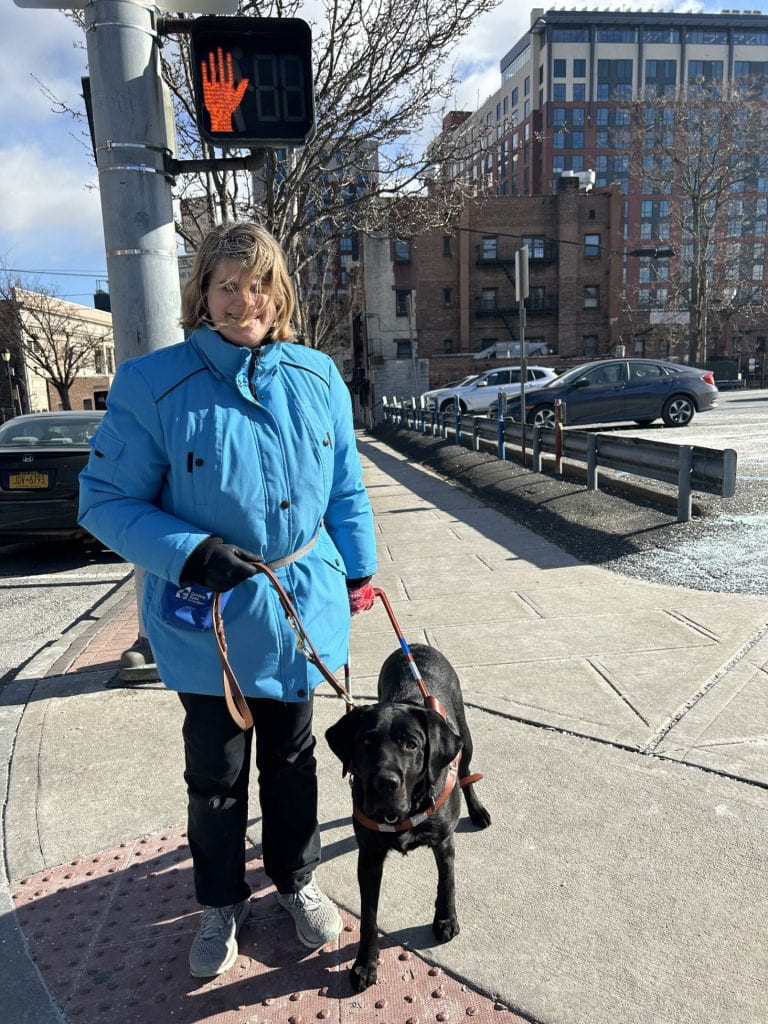
A blonde-haired woman in a sky blue winter coat is standing at a city crosswalk and smiling with eyes closed with a black guide dog at her side.

Kat DeNicola

she/her

Click or tap to read more about Kat DeNicola, Access Manager at the WWU Disability Access Center…

I received my Master’s degree in Counseling Education with a Rehabilitation specialty in 2014 from Portland State University. I have experience working in the vocational rehabilitation field, teaching assistive technology, and working with disabled college students which is what I currently do as an Access Manager at the WWU Disability Access Center.

One of the strongest messages disabled people receive from society is that we are broken. We are often viewed as less-than, as burdens. These judgments result in assumptions of what we can and cannot do, and thus what we are allowed and not allowed to do. As a totally blind woman, I believe the disabled body is something to be celebrated. We find ways to dance, to nurture, to create, to play sports, to make love, … And in our current climate where physical attacks on members of minority groups are increasing, we have the right to find ways to defend ourselves. The goal of my project is to provide general awareness and training to local self defense instructors on adapting their teaching techniques so that any disabled person can access training specific to their needs in an inclusive and accessible environment.

Disability Studies and Action Collaborative Logo, in dark blue, blue, and green, implying letters I, C, D, and S using colors and negative space.

Erin Howard

they/them

Click or tap to read more about Erin Howard, a research scientist and engineer at the University of Washington…

Erin is a genderqueer and neuroqueer disabled scientist working for the Vera C. Rubin Observatory at the University of Washington. They graduated from Western Washington University in June 2022 with a Bachelor of Science in physics and math/computer science, with minors in astronomy and statistics. Their time at Western was spent advocating for disabled students and working with the College of Science and Engineering through the Student Ambassadors Program to help make classrooms more accommodating to everyone. In their free time, Erin works with the University of Washington’s Disabilities, Opportunities, Internetworking, and Technology (DO-IT) program as a panelist talking about the life of a disabled student and worker.

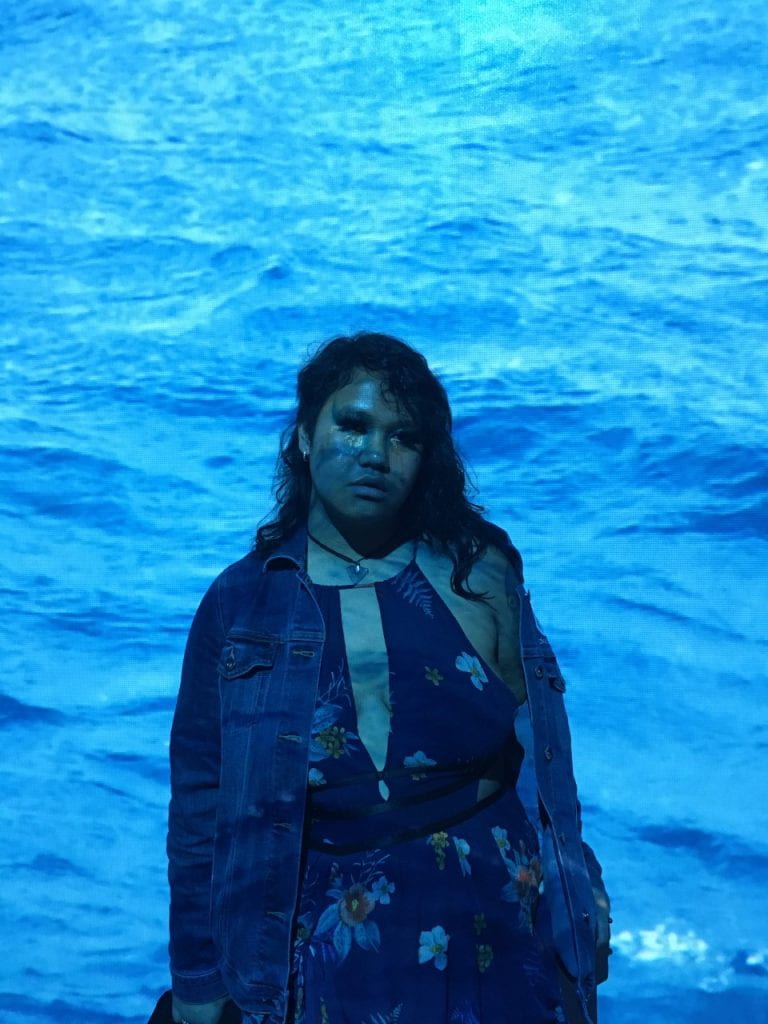
A photo all in tones of blue. A person with dark skin and long, dark hair is wearing a blue floral dress and denim jacket and standing in front of an ocean backdrop that is projecting shades of blue on their face and skin as well.

Jzy ||All Pronouns|| (Jazmine Joy De Leon Balila/Yeeles)

Click or tap to read more about Jzy, a WWU Alum…

Z devised their concentration in Declaration of Interdependence: Reclamation, Remediation, and Creation, minoring in Chemistry. They exist and operate in scalars–broadening perspectives and inviting specifications into moments and cases. She is of the ocean, space, and the elements. He devotes himself to timelessness and presence.

A selfie of a feminine person sitting and smiling at the camera, with magenta-rimmed glasses, pearl earrings, long wavy black hair, and grey and white striped button shirt.

Melina Juárez Pérez 

she/they

Click to read more about Melina Juárez Pérez, Assistant Professor of Political Science and Women, Gender, & Sexuality Studies 

Melina Juárez Pérez is an Assistant Professor in Political Science and Women, Gender, and Sexuality Studies. They were born and raised in the Central Valley, California in a Mexican immigrant farmworker community. Their work focuses on the lives, health, and happiness of Latinx and BIPoC communities, particularly that of fat, disabled, queer, and women folk. Her time as a CDS Fellow will be spent on examining the ways disability functions within Latinidad and how it shapes relationships among Latinxs.


Contact us

To reach the ICDS Fellows Program team with questions, please address emails to both of the following email addresses: icds@wwu.edu and icds.fellows.program@wwu2.onmicrosoft.com.


Archive

Previous Fellows Cohorts
  • Fellows 2023 main page (link)
« Previous Page
Next Page »

I want to…

  • Read Recent Announcements
  • Check out our Past Events
  • Learn about the Critical Disability Studies academic program
  • Take DISA Classes
  • Minor in Critical Disability Studies
  • Discover ICDS Resources
  • Apply for Scholarships and Student Jobs

Upcoming Events for this month

There are no events for this month.

Full calendar of events

January 2023
S M T W T F S
« Nov   Mar »
1234567
891011121314
15161718192021
22232425262728
293031  

Subscribe for Updates

Please, insert a valid email.

Thank you, your email will be added to the mailing list once you click on the link in the confirmation email.

Spam protection has stopped this request. Please contact site owner for help.

This form is protected by reCAPTCHA and the Google Privacy Policy and Terms of Service apply.

WWU’s main campus occupies the ancestral homelands of the Lummi Nation and Nooksack Tribe, Coast Salish Peoples who have lived in the Salish Sea basin and throughout the San Juan Islands and North Cascades watershed from time immemorial. We express our deepest respect and gratitude to our Indigenous neighbors for their enduring care and protection of our shared lands and waterways.

Western Washington University

516 High Street
Bellingham, WA 98225

(360) 650-3000

Contact Western

  • Western Facebook
  • Western Instagram
  • Western Flickr
  • Western Youtube
  • Western Today RSS

Accessibility | Privacy